
Air Duct Cleaning: Repair or Replace? How Draper Homeowners Decide
Most Draper homeowners ask the wrong question first. They want to know whether to clean the ducts or replace them, when the real issue is usually that the system is leaking and dirty at the same time. Cleaning a leaky duct system improves what you breathe but still wastes conditioned air. Replacing ductwork that only needed sealing wastes money. The honest answer often means doing two things, not picking one.
If you’d rather have someone put eyes and a pressure gauge on your system than guess from the hallway, call (855) 550-7165. We answer 24/7.
Why Duct Leakage and Duct Contamination Are Two Different Problems
Duct contamination is what you can see: dust, debris, and microbial growth coating the inside of the runs. Duct leakage is what you can’t see: gaps at joints, disconnected collars, and crushed flex sections that let conditioned air escape before it reaches a room. Both exist in plenty of Draper homes at once, and treating one without the other leaves you with a half-solved problem.
Leakage costs you at the thermostat. A system that loses a meaningful share of its conditioned air to an attic or crawlspace runs longer to hit the setpoint, and every escaped cubic foot of heated or cooled air is money that never reached a living space. Cleaning, meanwhile, is about what’s in the airstream. A clean but leaky system still pulls attic dust, insulation fibers, and crawlspace air back into the supply path through the very gaps you paid to clean around.
That’s why we treat the two as linked. Systems that draw from a leaky return near an attic or crawlspace can reintroduce debris the moment the fan kicks on. Our air duct cleaning work removes what’s inside the runs; sealing closes the paths that would let contamination back in. On their own, each does half the job.
What a Real Duct Inspection Actually Looks At
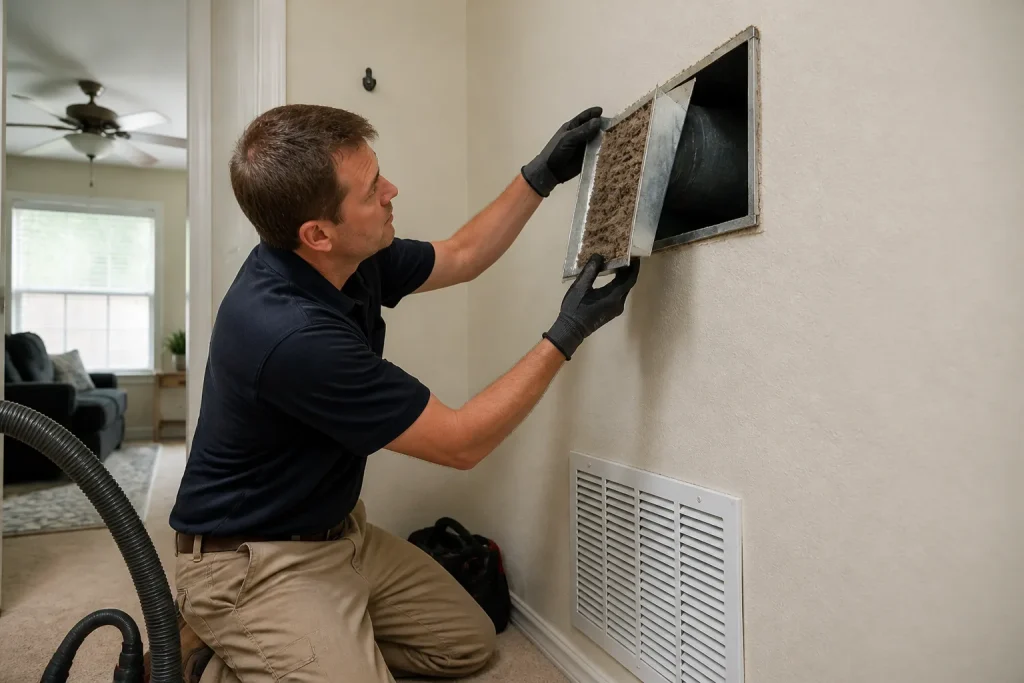
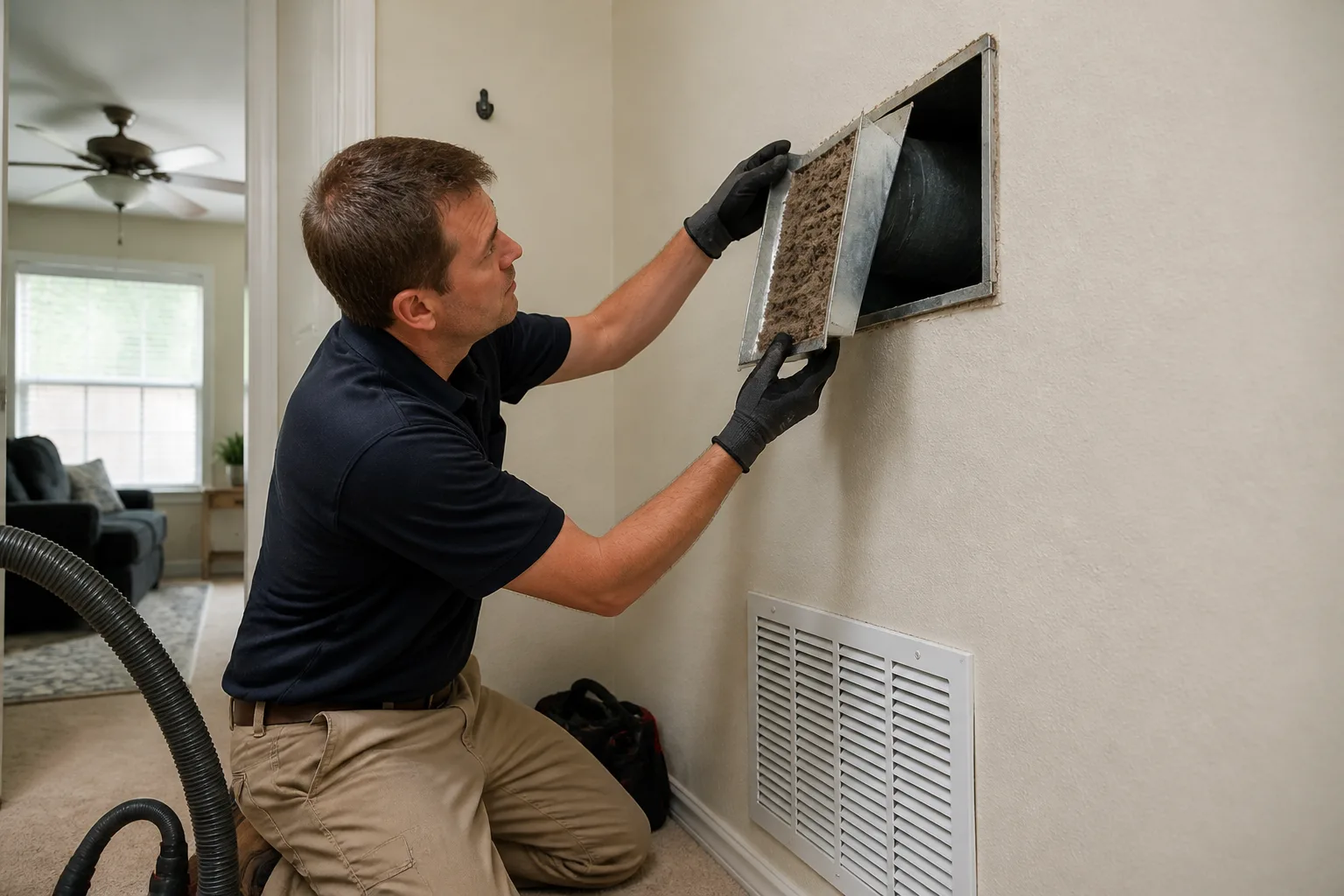
A proper inspection for a Draper home evaluates the system’s structure, not just its interior cleanliness. Anyone who only sticks a camera down a register and declares the ducts “dirty” hasn’t looked at the half of the system that determines efficiency. Here’s what we check:
- Joint integrity. Every seam, collar, and connection is examined for gaps, tape that has dried out and let go, and mastic that has cracked. In Utah’s dry air, old foil tape fails faster than most people expect.
- Flex duct crush points. Flex runs get pinched at turns, sat on in the attic, or kinked where they pass through framing. A crushed section chokes airflow no matter how clean it is.
- Insulation condition. Missing or degraded duct insulation in an unconditioned attic lets heat bleed in or out through the duct wall itself.
- Connection to the air handler. The plenum and cabinet connections are where the biggest leaks often hide, and they’re easy to overlook.
- Static pressure and airflow. A trained technician measures pressure to see whether the system is moving air the way it was designed to.
Cleanliness is one column. Structure and integrity are the others. A Draper home built in the 2000s often looks fine inside the runs while leaking badly at the joints, and you’d never know without measuring.
Air Duct Cleaning vs Repair vs Replace: A Decision Framework
The right call depends on what the inspection finds, not on the age of the house or a hunch. Use this as a rough guide, understanding that a written assessment of your specific system is what settles it.
- Clean alone is sufficient when the system is structurally sound, joints and connections are intact, airflow is where it should be, and the problem is contamination – visible debris, dust buildup, or growth from a moisture event.
- Clean and seal together when interior contamination coexists with measurable leakage. This is the most common outcome in Draper. We use professional-grade equipment like Rotobrush and Nikro systems built for duct interiors, then close the leaks so the clean work holds. Most duct cleaners stop at the cleaning and skip the sealing entirely, which is why the improvement fades.
- Repair specific runs when damage is localized: a crushed flex section, a disconnected collar, or a failed joint at one branch. Targeted repair costs far less than replacement.
- Replacement when the ductwork is undersized, run in materials that have reached the end of their service life, damaged beyond targeted repair, or laid out in a way that no amount of sealing will fix. Higher upfront cost, but the only honest answer in those cases.
Our technicians have up to 12 years of experience, and in our experience the framing homeowners most often arrive with, “the ducts are dirty, just clean them,” is the least likely to hold up once pressure is measured. Call (855) 550-7165 for a free estimate and we’ll tell you which of these four paths actually fits.
Draper Construction Details That Change the Decision
Draper’s typical construction shapes which problems show up and which fixes make sense. Two patterns matter most.
Attic flex runs in newer homes. Many Draper homes built in the 2000s route flex duct through unconditioned attic space. Attic temperatures swing hard across Utah’s seasons, and flex duct that lives in that environment degrades faster than ductwork tucked inside conditioned space. Foil tape dries, flex membrane weakens, and joints open. These runs are the ones most likely to need cleaning plus sealing, and sometimes targeted repair where a section has genuinely failed.
Slab-on-grade trunk lines. A portion of Draper homes sit on slab, with supply trunk lines buried under the concrete. Those lines can’t be replaced without jackhammering the floor, which is rarely the right call. When a slab home has a contaminated or leaky trunk, the practical answer is cleaning what’s reachable, sealing at the accessible connections, and addressing the branch runs above the slab. It reframes the decision from “replace or clean” to “work within what’s accessible.”
We see both plenty in Draper, and the construction tells you a lot about which path is realistic before anyone picks up a tool.
What Is Aeroseal Duct Sealing, and When Is It the Middle Ground?
Aeroseal is a sealing method that works from inside the ducts. A sealant mist is introduced and travels to the leaks, depositing where air is escaping and closing gaps a technician can’t reach by hand. Think of it as the step between “clean it” and “replace it.”
It’s worth considering when leakage is meaningfully high, the leaks are widespread or in spots behind walls and framing that don’t allow direct access, and the duct material itself still has working life. In those cases, aeroseal can recover a big share of the conditioned air you’re losing without tearing into drywall or attic floor. It makes less sense when the ductwork is undersized, badly damaged, or well past its service life – sealing a system that needs replacement just delays the decision.
We pair sealing work with professional equipment and treat it as part of the broader picture, alongside a compatible whole-home filtration system such as a Honeywell or Aprilaire setup and an air-quality treatment where growth or allergens are part of the story. The point is clean, sealed, and sanitized as one progression. Call (855) 550-7165 to walk through whether aeroseal fits your Draper system.
When to Call a Pro
Some of this you can inspect yourself: look at registers for visible buildup, check for loose or fallen tape where you can see it, and notice whether certain rooms never seem to get comfortable. But pressure testing, joint assessment inside the system, and any decision that involves sealing or replacing ductwork need trained hands and the right equipment. Contaminants that flow back through a poorly handled job are a real risk, and a leaky system can hide behind a clean surface.
If you want a straight answer rather than a sales pitch, that’s the point of the free estimate. We use purpose-built tools from Rotobrush and Nikro and equipment from Abatement Technologies for air-quality work, and we’ll tell you plainly whether cleaning, repair, or replacement fits.
Related services in Draper: dryer vent cleaning for the fire-risk side of your exhaust system, and HVAC cleaning for the air handler and coil side of the same picture.
The Bottom Line
Cleaning, repair, and replacement aren’t competitors in a price comparison. They answer three different questions: what’s inside the ducts, what’s leaking from them, and whether the ductwork is worth keeping. A Draper home with a leaky, dirty system usually needs a clean and a seal, not a full rebuild. The honest answer starts with an inspection that measures structure and airflow, not one that just says “they’re dirty.”
If you’re not sure which side of the decision your home falls on, that’s exactly what we’re here for. Cleaning removes what’s building up, sealing keeps clean air where it belongs, and sanitizing addresses growth and allergens at the source. Get a free estimate and a clear read on your own ducts rather than a generic recommendation.
If you’re in Draper and need help, Draper Air Duct Cleaning Pros offers free estimates. Call (855) 550-7165. We answer 24/7.
Frequently Asked Questions
No. Cleaning removes contamination inside the ducts, but it doesn’t close gaps at joints, collars, or crushed flex sections. If your Draper system is leaking, you’ll still lose conditioned air and draw in attic or crawlspace air after a clean. A proper inspection tells you whether sealing needs to accompany the cleaning, which is often the case in Draper homes. Call (855) 550-7165 for a free estimate on what your system actually needs.
It comes down to what an inspection finds. Localized damage like a crushed flex run or a disconnected joint usually means targeted repair. Undersized ductwork, materials past their service life, or damage across the whole system points toward replacement. In slab-on-grade Draper homes, buried trunk lines can’t be replaced without breaking the floor, so the answer shifts to cleaning and sealing what’s accessible. A written assessment of your system is what settles it; call (855) 550-7165 to get one.
Usually yes. Cleaning improves air quality, but sealing is what keeps clean air moving where you want it and stops attic or crawlspace air from being pulled back in. In Draper homes with attic flex runs that have aged and opened at the joints, sealing alongside cleaning is the combination that actually holds. Aeroseal can close leaks you can’t reach by hand. Call (855) 550-7165 for a free estimate.
It depends on the system and the home. A system that’s clean and tight may only need a check every few years, while a Draper home with attic flex runs or a recent moisture event may need closer attention. What matters more than a calendar rule is whether the system is leaking or drawing debris in, and only an inspection answers that. Call (855) 550-7165. We answer 24/7. Fast dispatch from 7am to 7pm, Sunday through Friday.
Written by the team at Draper Air Duct Cleaning Pros.
Need Air Duct Cleaning Help?
Call Draper Air Duct Cleaning Pros - the local pro we connect you with is licensed and insured, here with fast help in Draper.
(855) 550-7165