
Abatement Technologies Air Duct Cleaning in Draper: A Homeowner’s Guide
Abatement Technologies equipment shows up in Draper duct-cleaning quotes more often than it used to, and homeowners keep asking us the same question: does the machine actually matter? It does, but not in the way the marketing implies. A HEPA-rated negative air machine is a serious piece of hardware, yet its whole value depends on one thing you can’t see from the driveway. If the technician doesn’t seal and isolate your duct system before agitating debris, that filtered machine just runs next to a set of ducts quietly blowing dust back into your living room. This guide explains what the equipment is built to do, when it’s genuinely warranted, and how to tell a correct setup from a logo on a truck.
What Abatement Technologies Equipment Is Actually Built to Do
Abatement Technologies makes HEPA filtration and negative air pressure equipment for contaminated environments, the kind of spaces where you can’t afford to let particles float free. That includes medical rooms, mold remediation, and post-fire work. When a Draper air duct company brings this class of equipment into a house, the intent is to capture debris at its source instead of letting the vacuum’s exhaust redistribute it.
Two capabilities define the machines:
- HEPA filtration. True HEPA filters are rated to capture particles down to 0.3 microns, which covers mold spores, fine dust, and a good share of combustion particulate. That is what lets the machine return air to a living space rather than venting it somewhere else.
- Negative air pressure. The machine pulls more air out of the duct system than leaks in, so any loose contamination gets drawn toward the collection point instead of pushing out through gaps and register seams.
Neither feature does anything on its own. A HEPA filter downstream of a system that’s still under positive pressure is decoration. The pressure relationship is what keeps your Draper home clean during the work, and that comes from setup, not from the badge on the housing. Our own approach pairs source-capture systems from Rotobrush and Nikro with HEPA-stage equipment when a job calls for it, because the two tools close different gaps.
The Setup Protocol That Separates a Real Job From Brand-Name Marketing
A properly equipped crew isolates the system, creates verified negative pressure, and places collection points deliberately. Those three steps are the difference between cleaning ducts and redistributing what’s in them. If you watch anything during a job, watch the setup.
- Duct isolation. The technician seals registers and caps the system so it operates as a closed loop. Gaps at supply boots and return plenums have to be blocked, or the vacuum pulls house air instead of duct air.
- Negative pressure verification. After isolation, the machine runs and the technician confirms the system is pulling inward. If you can feel air escaping at a register while the vacuum runs, the seal isn’t holding.
- Collection point placement. The main collection point goes where the largest volume of debris will pass, usually at the main trunk near the air handler. Branch runs get worked toward it, not away.
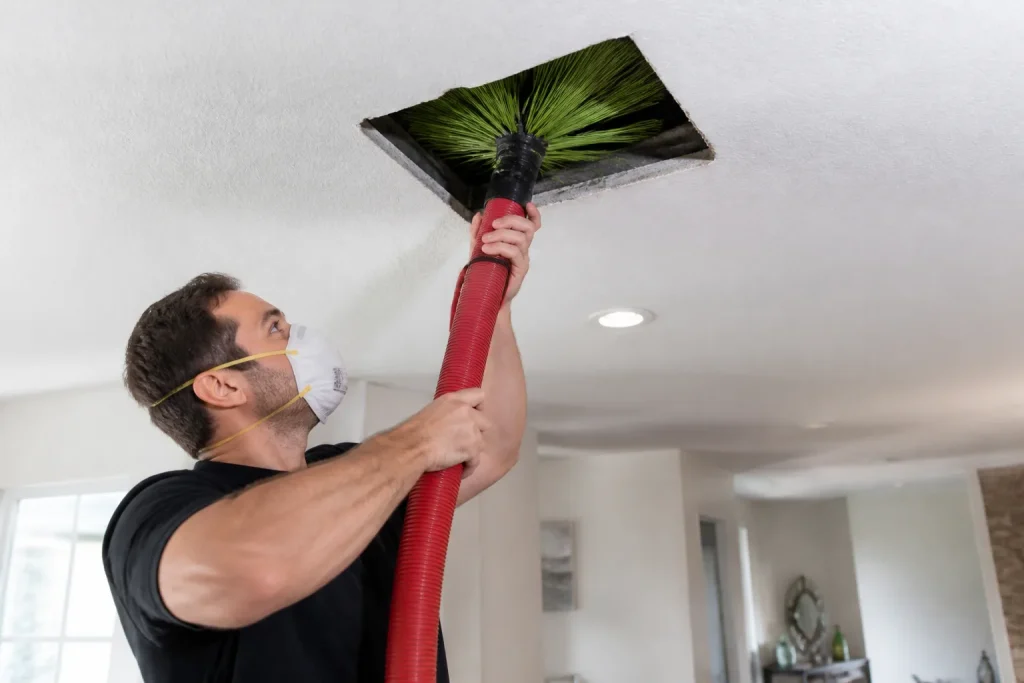
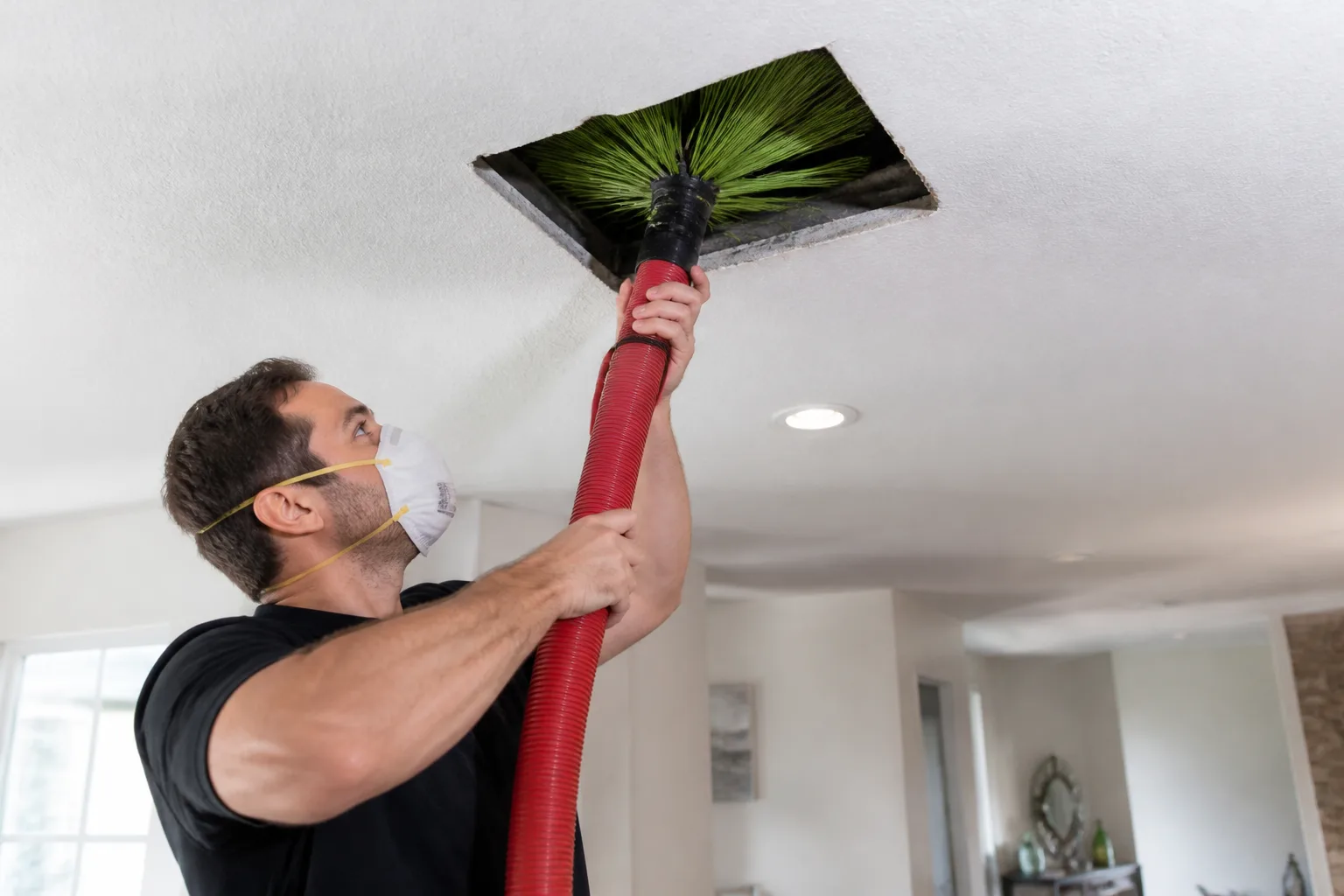
- Agitation. A rotary brush or air whip loosens debris from duct walls. This is the step that kicks up the most particulate, which is exactly why negative pressure has to be verified first.
In a typical Draper home, the setup phase is the slowest part of the visit. That’s normal. A crew that starts brushing within five minutes of arrival hasn’t finished isolating, and that’s worth asking about. We’d rather a homeowner question the timeline than wonder later where the cloud went.
Which Jobs Actually Need HEPA-Grade Equipment
Routine maintenance cleaning rarely needs the full HEPA setup. Contamination events do. The distinction matters because you shouldn’t pay for remediation-grade work on a system that just needs a standard clean, and you shouldn’t accept a standard clean on a system that’s been through something.
This class of equipment is genuinely warranted for:
- Mold growth inside ducts or on the air handler. Spores get disturbed during cleaning, and HEPA capture plus negative pressure keeps them out of the occupied space. Sanitizing afterward treats what the filter can’t reach.
- Post-fire particulate. Smoke residue and fine ash travel deep into a system. Standard vacuuming stirs it back up.
- Rodent contamination. Droppings, nesting material, and the associated pathogens demand source capture, not agitation.
- Heavy renovation dust. A remodel that ran while the HVAC was circulating pushes fine gypsum and silica dust through the whole system.
For an ordinary Draper home with no contamination event, professional air duct cleaning with a source-capture system handles it. We’ll tell you plainly when HEPA-grade work is overkill for your situation. It’s not a sales pitch we lean on when the ducts don’t need it.
What HEPA-Rated Cleaning Removes, and What It Leaves Behind
Filtered duct cleaning removes accumulated debris, settled particulate, and biological material it can reach. It does not sterilize a home or fix a system that’s leaking air through every joint. That’s an important limit, and knowing it keeps expectations honest.
What good equipment and setup can remove or reduce: loose dust and debris from duct walls, mold spores captured before they circulate, combustion and smoke particulate after a fire, and rodent-related contamination. What it can’t address on its own is air leaking out of unsealed duct joints, which reintroduces attic and crawlspace air downstream of the filter. That’s why we pair cleaning with duct repair and sealing rather than treating a vacuum pass as the whole answer.
It also can’t replace filtration at the equipment itself. If your Draper home runs a Honeywell or Aprilaire whole-home filtration system, the filter media and the cabinet around it need to be right, or you’re pulling filtered air through an unfiltered gap. Sanitizing treatments address microbial growth on duct surfaces after cleaning. They aren’t a substitute for sealing or for functioning filtration. Clean, sealed, and sanitized in that order is what actually moves the needle.
How to Verify the Equipment Was Used Correctly
Ask for before-and-after photos and a post-job report. That’s the short answer. Any crew running this class of equipment should be able to show you what came out and what the system looked like inside.
A useful report includes:
- Photos of the duct interior before and after, taken at the same points.
- The equipment used and how it was configured, including whether HEPA filtration and negative pressure were part of the setup.
- Which system components were cleaned: supply, return, registers, air handler, and coils if included.
- Any condition issues found, such as disconnected joints, crushed flex duct, or visible microbial growth.
During the job, three questions are worth asking. Is the system under negative pressure right now, and can you show me? Where’s the collection point? What are you doing to keep the return side from pulling house air? A technician who can answer those without hesitating knows the equipment. One who can’t is running a vacuum and hoping the brand name carries the conversation. In our experience across Draper homes, the answers tell you more than the brochure does.
When to Call a Pro
Call when you can see growth inside a register, when the system has been through water, fire, or a rodent problem, or when dust returns within days of a cleaning. If your dryer is taking two cycles to dry a load, that’s a different safety issue entirely, and dryer vent cleaning is the right call.
Related services in Draper: HVAC cleaning covers the air handler, coils, and blower, which is where a lot of the debris a duct vacuum never touches actually sits. For the full picture of what we do, see Draper Air Duct Cleaning Pros.
If you’d rather not stand in the hallway timing the setup yourself, call (855) 550-7165. We answer 24/7. Fast dispatch from 7am to 7pm, Sunday through Friday.
The Bottom Line
Abatement Technologies equipment is built for contamination you don’t want airborne, and it earns its place on the jobs that genuinely need HEPA capture and negative pressure: mold, post-fire particulate, rodent contamination, heavy renovation dust. On routine maintenance, the machine matters far less than the isolation and pressure verification a technician performs before touching a brush. If a Draper company quotes the brand without explaining the setup, ask the three questions above. The answers separate a real job from a logo.
If you’re in Draper and need help, Draper Air Duct Cleaning Pros offers free estimates. Call (855) 550-7165.
Frequently Asked Questions
HEPA filters in this class are rated for particles down to 0.3 microns, which is the standard definition of true HEPA. That rating only holds if the filter is correctly seated and the machine is pulling air through it rather than around it. Ask the technician to confirm the filter is in place and the housing is sealed before the work begins.
No, not for routine maintenance. HEPA capture and negative pressure are warranted when there’s mold, fire residue, rodent contamination, or heavy renovation dust. Standard source-capture cleaning handles an ordinary system. Call (855) 550-7165 and we’ll tell you which one your home actually needs. We answer 24/7. Fast dispatch from 7am to 7pm, Sunday through Friday.
You should see duct isolation before any agitation starts, verified negative pressure, and a deliberate collection point at the main trunk. Ask for before-and-after photos and a post-job report listing equipment, configuration, and components cleaned. If you can feel air pushing out of a register while the vacuum runs, the seal wasn’t holding.
Not entirely. It removes debris and captures particulate before it circulates, but unsealed duct joints reintroduce attic and crawlspace air downstream of the filter, and microbial growth needs a sanitizing treatment after cleaning. Clean, sealed, and sanitized together is what addresses air quality. Call (855) 550-7165 for a free estimate.
Written by the team at Draper Air Duct Cleaning Pros.
Need Air Duct Cleaning Help?
Call Draper Air Duct Cleaning Pros - the local pro we connect you with is licensed and insured, here with fast help in Draper.
(855) 550-7165