
Last updated November 24, 2026
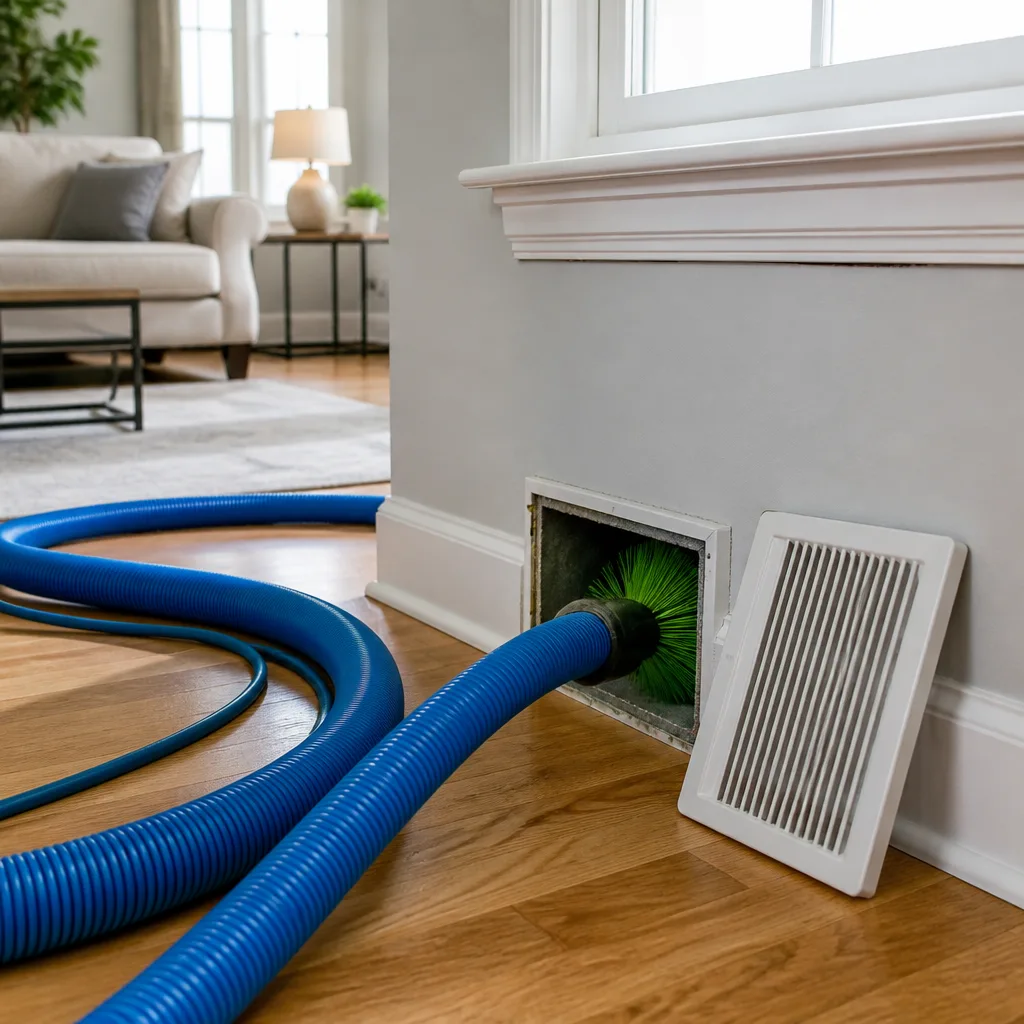 Whole-home duct cleaning
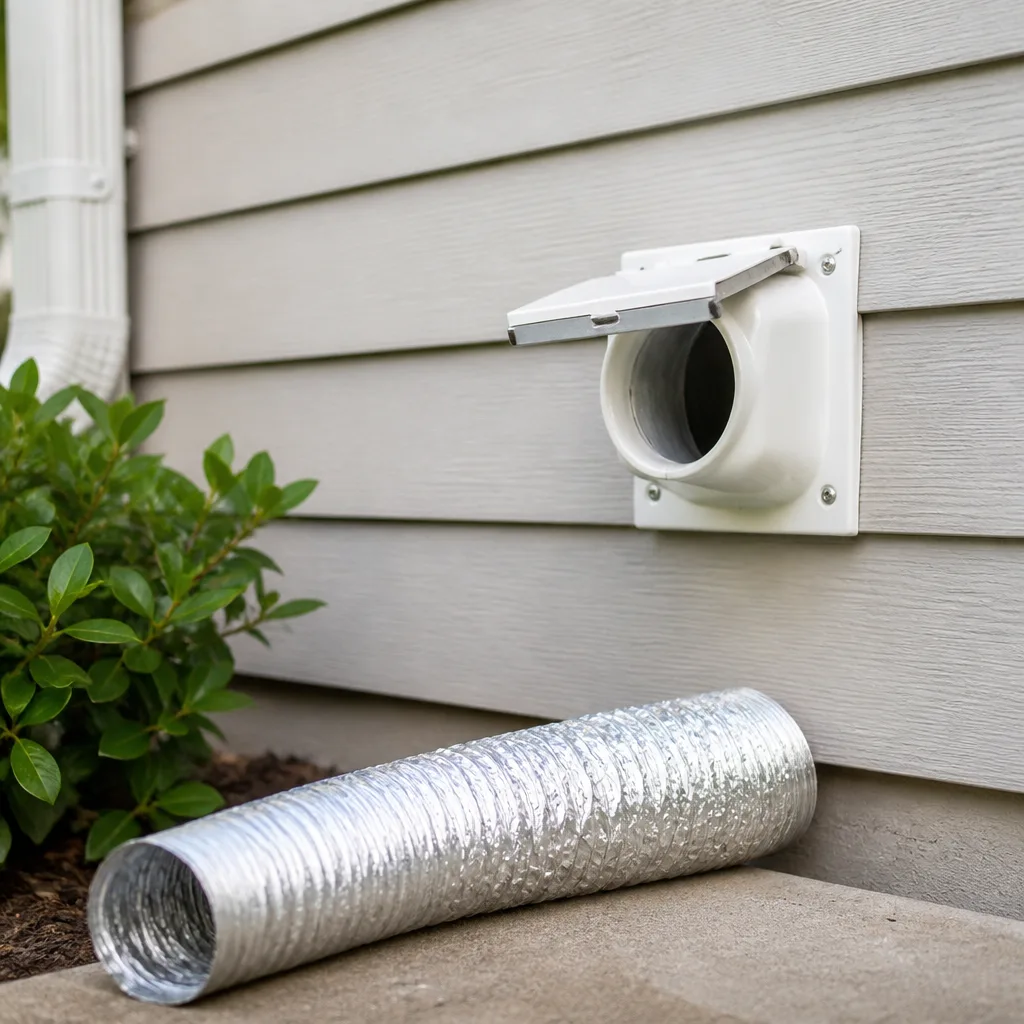 Dryer vent cleaning
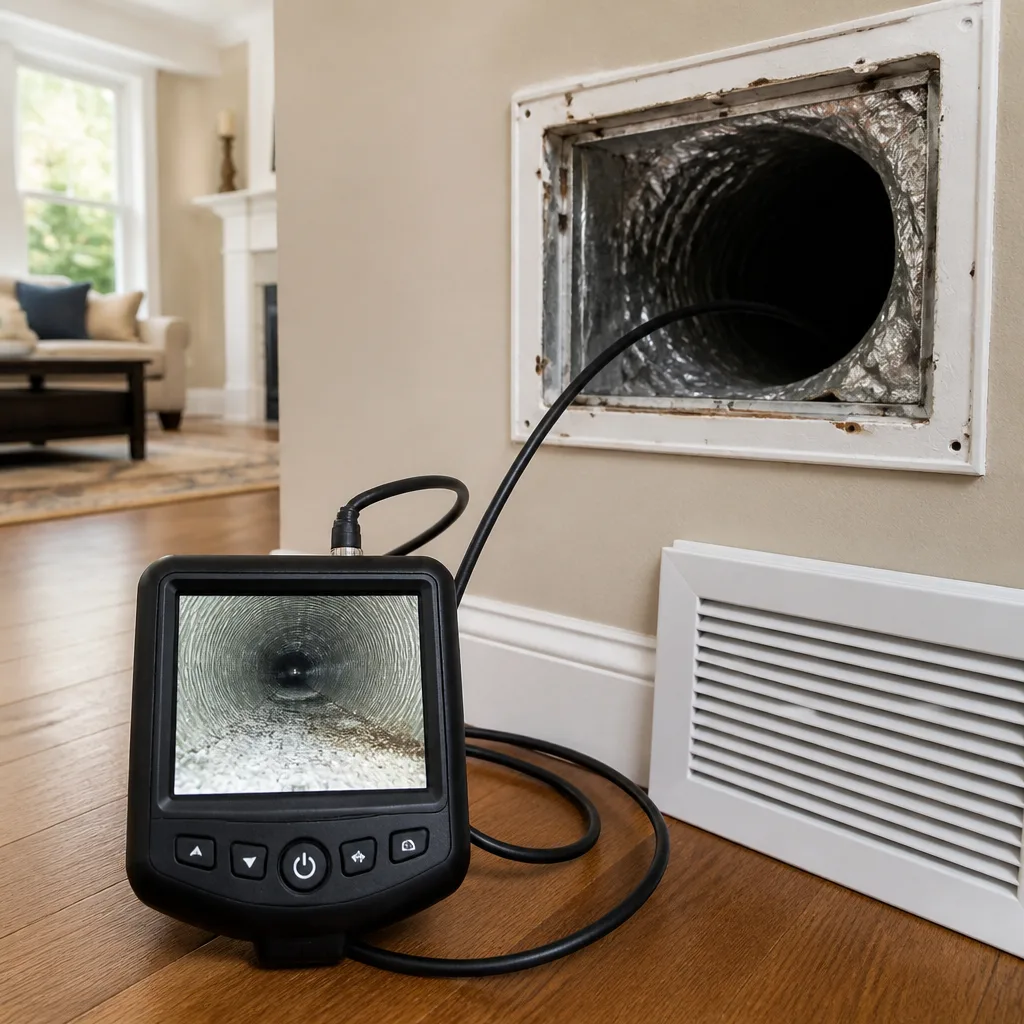 Camera inspection
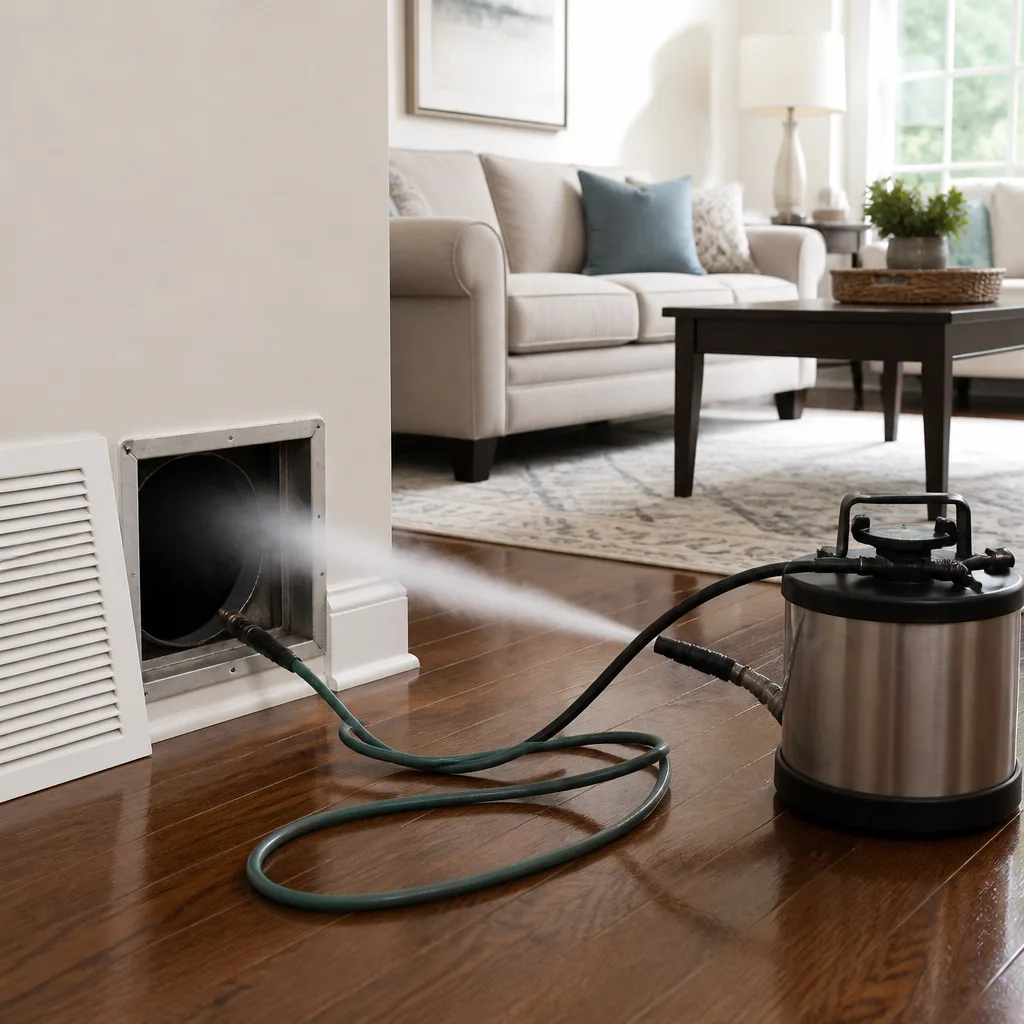 Sanitizing & deodorizing
Whole-system duct and dryer vent check with before-and-after photos - you see exactly what came out of your vents
That "$99 whole-house special" is a bait ad - the real number appears once they are in your hallway, or the "clean" is a shop-vac at the register. We photograph the inside of your ducts before and after instead.
DIY vs Professional Air Duct Cleaning: The Draper Homeowner’s Decision Guide
A shop vac and a dryer vent brush will get the debris you can see. The debris you can’t see is sitting in the forty feet of branch ductwork between your register and your air handler, and no consumer tool reaches it effectively. That’s the whole argument in one sentence, and it has nothing to do with whether you’re handy. It’s about physics. In this guide we’ll explain what negative-pressure equipment actually does that a vacuum from the hardware store can’t, what you can genuinely handle yourself, which home methods make things worse, and how the long flex runs in Draper’s newer two-story homes change the math.
Quick Answer
Professional air duct cleaning is worth it when you have visible debris at the registers, a musty smell when the system starts, or long duct runs in a two-story Draper home, because only truck-grade negative-pressure equipment extracts buildup from branch ducts and the air handler. DIY is a reasonable choice for dryer vent lint, register grille washing, and vacuuming the return filter housing. The dividing line is reach and suction at the source, not effort.
Styles & brands we work with
- Whole-home duct cleaning
- Dryer vent cleaning
- Camera inspection
- Sanitizing & deodorizing
Table of Contents
- Why Suction at the Register Isn’t the Same as Cleaning the Duct
- What You Can Genuinely Do Yourself
- When DIY Becomes Counterproductive
- DIY vs Professional: The Honest Cost Comparison
- Why Draper’s Newer Homes Make This Decision Easier
- What Professional Equipment Actually Does
- Clean, Sealed, and Sanitized: The Full-System Approach
- Your Dryer Vent Is a Fire Risk, Not a Maintenance Footnote
Why Suction at the Register Isn’t the Same as Cleaning the Duct
The core misunderstanding in the DIY vs professional air duct cleaning debate is that a vacuum’s suction rating at the nozzle tells you how well it cleans a duct. It doesn’t. What matters is the pressure differential the machine can hold across the entire duct system while it works. Professional systems from Rotobrush and Nikro are built around that principle: they put the whole run under negative pressure and disturb the debris with an air whip or rotary brush on a flexible line, so loosened material travels toward the collection unit instead of settling back onto the duct wall.
Here’s the practical difference, in plain terms:
- Consumer vacuum: pulls air from the register opening. The moment the nozzle is a few feet in, airflow drops off sharply and nothing forty feet away moves.
- Professional negative-pressure system: attaches at the main trunk or air handler, seals the system, and creates a sustained pull across every branch at once while the technician works each run.
- The numbers that matter: sealed cubic feet per minute and static pressure at the source, not the “peak horsepower” sticker on a shop vac.
Dust that’s settled in a branch duct isn’t loose. It’s adhered to the galvanized or flex liner, often with a light film of moisture and oil that makes it cling. You need airflow velocity plus mechanical agitation to break that bond. A shop vac creates neither at the far end of a duct run. That’s the specific mechanical limit, and it’s the one most DIY guides leave out. If you want a plain explanation of what a proper full-system job involves, our air duct cleaning page walks through it step by step.
What You Can Genuinely Do Yourself
Some duct maintenance is well within reach of a homeowner with basic tools, and we’d rather you do those things than pay someone to handle them. Here’s the honest list.
- Dryer vent cleaning. Disconnect the vent from the back of the dryer, pull out the lint by hand, and run a vent brush through the run to the exterior hood. This is one job where DIY actually works when the run is short and accessible, though long runs with multiple elbows are tougher. We cover the full method on our dryer vent cleaning page.
- Register grille washing. Pop off the supply and return grilles, wash them in the sink with dish soap, dry them fully, and put them back. This removes visible surface dust and takes fifteen minutes.
- Return filter housing vacuuming. With the system off, vacuum the cavity around your filter slot and wipe down the edges. Debris tends to collect at the filter frame before it ever reaches the duct.
- Filter replacement. A clogged filter restricts airflow and stresses the blower. Replacing it on schedule is the cheapest air-quality improvement in the house.
Notice what’s not on that list: cleaning branch ducts, cleaning the air handler interior, or sanitizing an HVAC system. Those require equipment most homeowners don’t own and can’t rent easily, plus a working knowledge of how to avoid damaging flex liner or dislodging components. Leave them alone.
When DIY Becomes Counterproductive
Some DIY attempts don’t just fail to clean the duct system. They make it worse. The most common one we see described online is the leaf blower trick: feeding a leaf blower into a register and blasting air through the ducts. It feels productive because dust plumes out of every vent in the house. That dust had settled. Now it’s airborne, coating surfaces, and some of it is being pushed deeper into the system and into the air handler where it can foul the blower wheel and evaporator coil.
The same problem shows up with forward-pressure tools in general:
- Leaf blowers push debris into the air handler and secondary branches instead of removing it.
- Shop vacs with improvised hoses create suction at the opening but can’t sustain the pressure differential needed to lift adhered dust deep inside a run.
- Rotary brushes on a drill risk snagging and tearing flex duct liner if you don’t know the material and the run geometry, and a torn liner is a permanent leak.
- Compressed air at the register loosens surface dust without capturing it, which just recirculates it into the living space.
In a Draper home with a finished basement or a second-floor bonus room, that recirculated dust often settles in rooms that don’t see much foot traffic, so the problem hides for months. By the time someone notices the smell, the debris has redistributed across the entire duct system. That’s not a health emergency, but it means the eventual professional cleaning has more to remove, not less.
DIY vs Professional: The Honest Cost Comparison
The DIY case usually comes down to equipment rental plus a Saturday. Rental of a duct cleaning machine isn’t as easy as renting a carpet cleaner, and it’s worth pricing out honestly before deciding. Here’s a structured comparison of what each path actually involves. Specific price ranges vary by home size, number of runs, and condition, so the written estimate from a provider sets the final number.
- Equipment rental: duct cleaning machines aren’t stocked at most general rental yards. When you do find one, daily rental plus a whip attachment and brush kit runs into the low hundreds of dollars, and you still have to figure out the technique.
- Your time: a full-system clean on a Draper two-story home with 12 to 20 registers takes a trained technician several hours. A first-timer will spend far longer, with a lower-quality result.
- Consumables: brushes, drop cloths, tape, seals, filter. Small individually, real in aggregate.
- Risk: damaged flex liner, disconnected joints, or a fouled air handler can offset any savings in a single incident.
Now the professional side:
- Whole-system quote: a licensed local pro gives a written estimate per job, covers the full system, and uses purpose-built equipment. No per-vent pricing games.
- Included scope: main trunk, every branch, air handler cavity, and register openings. Sealing and sanitizing are usually separate line items, often quoted together.
- Verified outcome: before-and-after photos of your own ducts, not stock photos of someone else’s.
For the majority of Draper homes with finished basements and long runs, the professional path is the better value once you account for equipment, time, and the risk of making things worse. If the only issue is a dusty register grille, don’t call anyone. Wash it yourself.
Why Draper’s Newer Homes Make This Decision Easier
The housing stock in Draper tilts toward newer construction, and that changes the DIY vs professional question. Older ranch-style homes often have short, straight, rigid-metal duct runs with easy access from an unfinished basement or crawlspace. Newer Draper homes frequently include:
- Long flex duct runs snaking through conditioned attics and between floors, which are harder to clean because flex liner has ridges that trap dust and less tolerance for rough brushing.
- Finished basements and vaulted ceilings that hide duct access points behind drywall, so cleaning from inside the run with a consumer tool isn’t practical.
- Two-story layouts with zoned systems, meaning more branches, more turns, and more places for debris to settle out of the airstream.
- Whole-home filtration systems like Honeywell and Aprilaire units that need to be bypassed or worked around during cleaning, which requires knowing the hardware.
In an open ranch house, a determined homeowner can sometimes make a dent with a long whip and a shop vac fed through the basement ceiling. In a Draper two-story with forty-foot flex runs folded through an attic chase, the reach limit isn’t a minor inconvenience. It’s the whole job. That’s why we treat Draper’s layout profile as a factor when we quote the work.
What Professional Equipment Actually Does
The machines matter, which is why we name them. Rotobrush and Nikro duct cleaning systems are purpose-built for residential HVAC cleaning. They combine a sealed negative-pressure unit with a flexible rotary whip or brush that a trained technician feeds through each branch duct from the register back to the trunk. The machine creates continuous suction across the whole system while the technician loosens debris inside each run. Debris travels to the collection unit. It doesn’t recirculate.
Two more pieces of equipment come into play on a full job:
- The air handler cleaning tooling. The blower wheel, evaporator coil, and return plenum are where a lot of the visible debris collects. Cleaning the ducts without cleaning the air handler leaves the source untouched.
- The sanitizer. Once the system is clean, a food-safe sanitizing mist can be applied to the duct interior. It reaches surfaces a vacuum can’t reach because it treats the whole run as a chamber. Abatement Technologies equipment is what we use for that step, the same equipment line deployed in commercial and remediation environments.
If you’ve had an HVAC service call recently and were told your ducts were “cleaned” with a shop vac, that’s not the same job. Our HVAC cleaning page explains the difference between a duct vacuum pass and a true system clean, including the air handler.
Clean, Sealed, and Sanitized: The Full-System Approach
Most duct cleaning services stop at cleaning. We treat that as the first of three steps, because cleaning an unsealed duct system is like mopping a floor with the door open. Debris comes right back through the same leaks.
The full-system sequence looks like this:
- Clean. Every branch, the main trunk, and the air handler are cleaned under negative pressure with the sealed system approach above.
- Seal. Loose joints, gaps at the register boots, and disconnected flex collars get sealed. A properly sealed duct system holds the pressure the blower is producing, which is the same condition that makes cleaning effective. It’s also what lets conditioned air reach the room it’s supposed to heat or cool instead of leaking into an attic chase.
- Sanitize. Once the system is clean and sealed, an air-quality treatment reaches the interior surfaces where mold spores, bacteria, and allergens settle. Abatement Technologies equipment handles that step. It’s the difference between removing visible debris and reducing what grows on the duct wall between cleanings.
The reason this matters for the DIY vs professional question is that sealing and sanitizing aren’t things a homeowner can do with rented equipment. A shop vac can’t find a leak, seal a joint, or apply a surface treatment. The full lifecycle service is where professional scope pays off. If you want to see how the three steps fit into a single visit, our Draper Air Duct Cleaning Pros page covers the full scope.
Your Dryer Vent Is a Fire Risk, Not a Maintenance Footnote
Dryer vent cleaning is the one item on the DIY list where we’d suggest homeowners take the safety angle seriously. Lint is highly combustible, and a clogged dryer exhaust gives it three things it needs to burn: fuel in the vent, heat from the dryer, and an obstruction that keeps heat from escaping. That’s why dryer vent cleaning is a leading household fire-hazard reduction measure, not a light maintenance task.
Many homeowners can clean a short, straightforward vent themselves, especially when the duct runs straight back through an exterior wall within a few feet. But some Draper homes have longer runs through interior walls, up through the attic, or with multiple elbows that snag a brush partway. Those are the situations where professional equipment matters, and where a technician trained on the specific hazard profile of lint-clogged exhaust systems can clear what a homeowner can’t. If you’re not sure how long your run is, the answer to “DIY or professional” for the dryer vent is usually professional. Don’t leave it on the never-list.
Common Mistakes to Avoid
- Using a leaf blower to “clean” the ducts. It blows debris into the air handler and further into the system instead of extracting it, and can foul the blower wheel and evaporator coil.
- Assuming a shop vac equals a duct cleaner. Suction at the nozzle is not negative pressure across the system. A shop vac can’t reach forty feet of branch duct, no matter how many extensions you stack.
- Cleaning only the registers. Debris collects in the trunk and the air handler cavity, not just at the vent openings. Register-only cleaning is cosmetic.
- Skipping the air handler. A duct that’s clean feeding a fouled blower and coil won’t deliver cleaner air. The system has to be cleaned as a whole.
- Cleaning before sealing. Unsealed joints pull attic air and insulation fibers into the duct system. Cleaning without sealing is temporary.
- Attacking flex duct with a stiff brush. Flex liner tears easily. Once it’s torn, the leak is permanent and the run needs repair.
- Neglecting the dryer vent. A clogged dryer vent is a genuine fire risk, and it’s the one duct most likely to be ignored for years. Clean it or have it cleaned.
See the difference
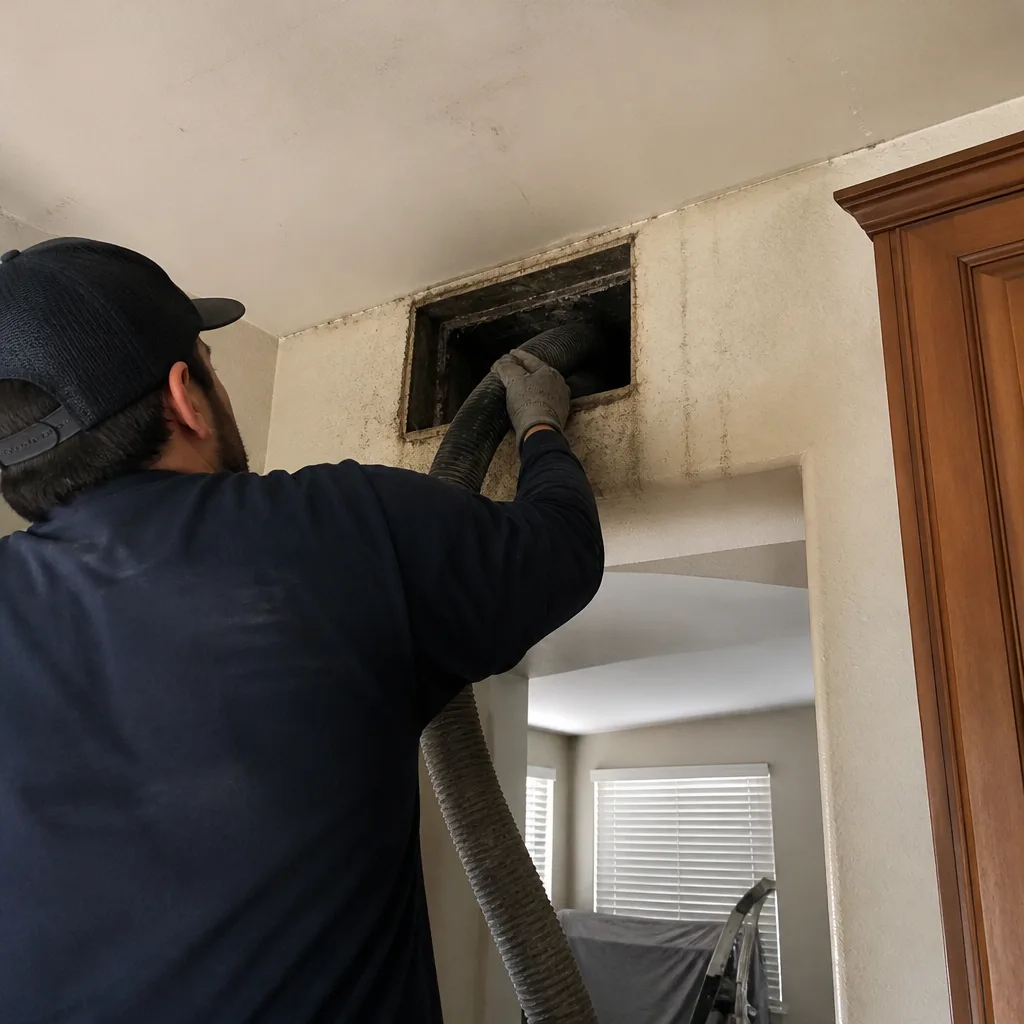 Before
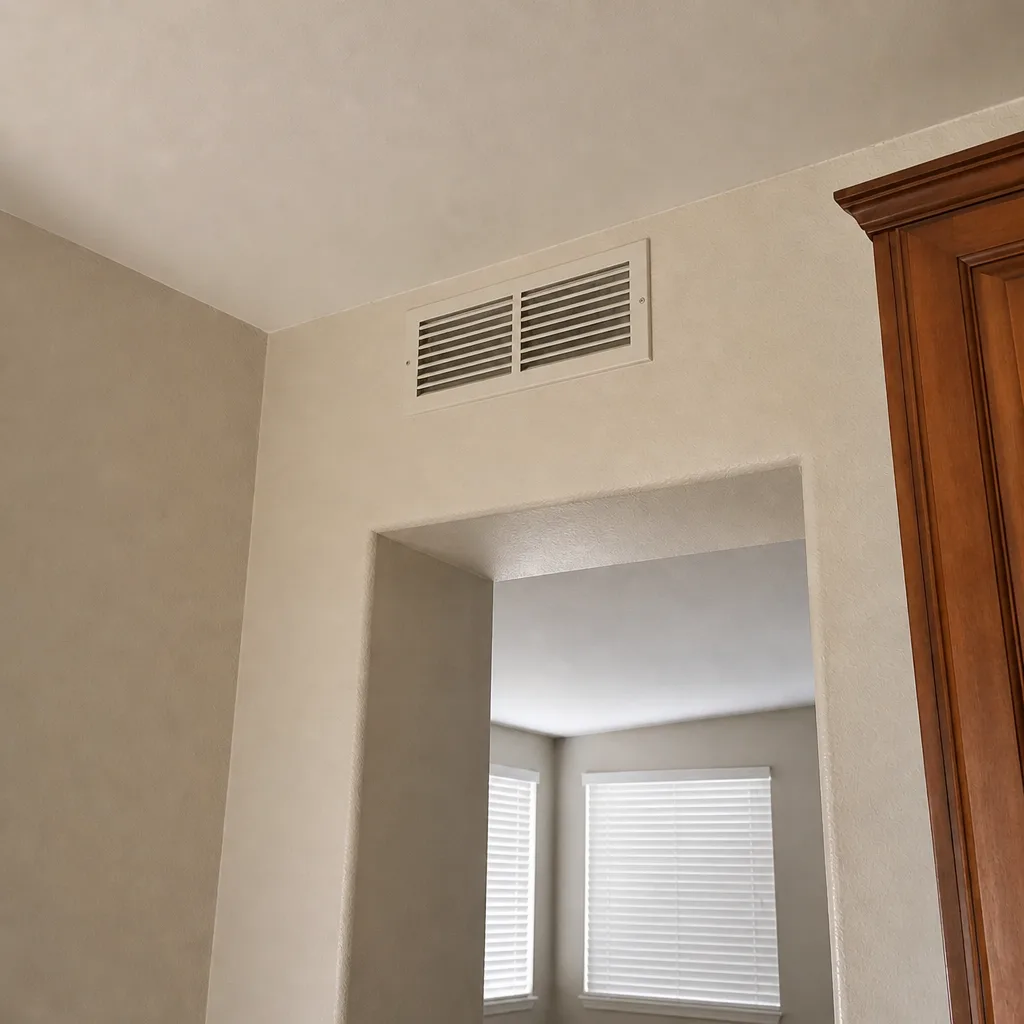 After
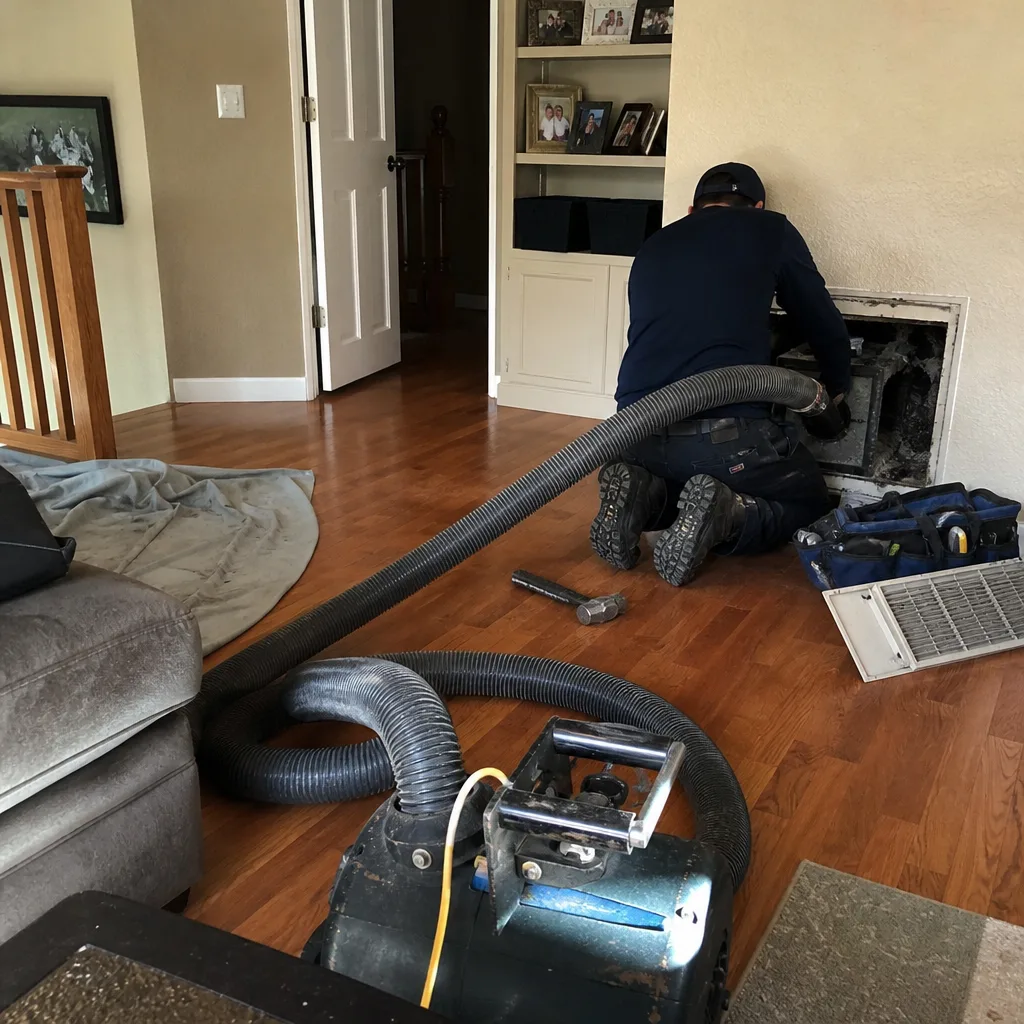 Before
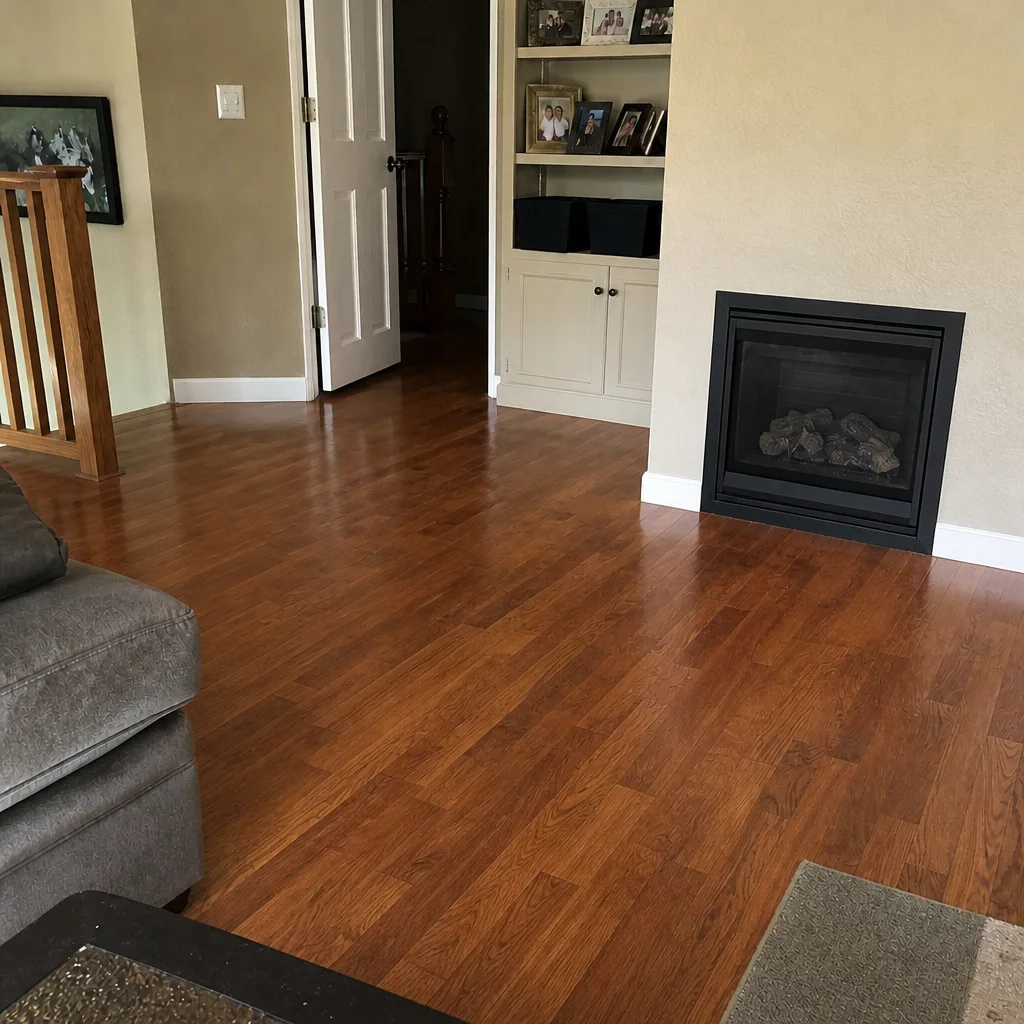 After
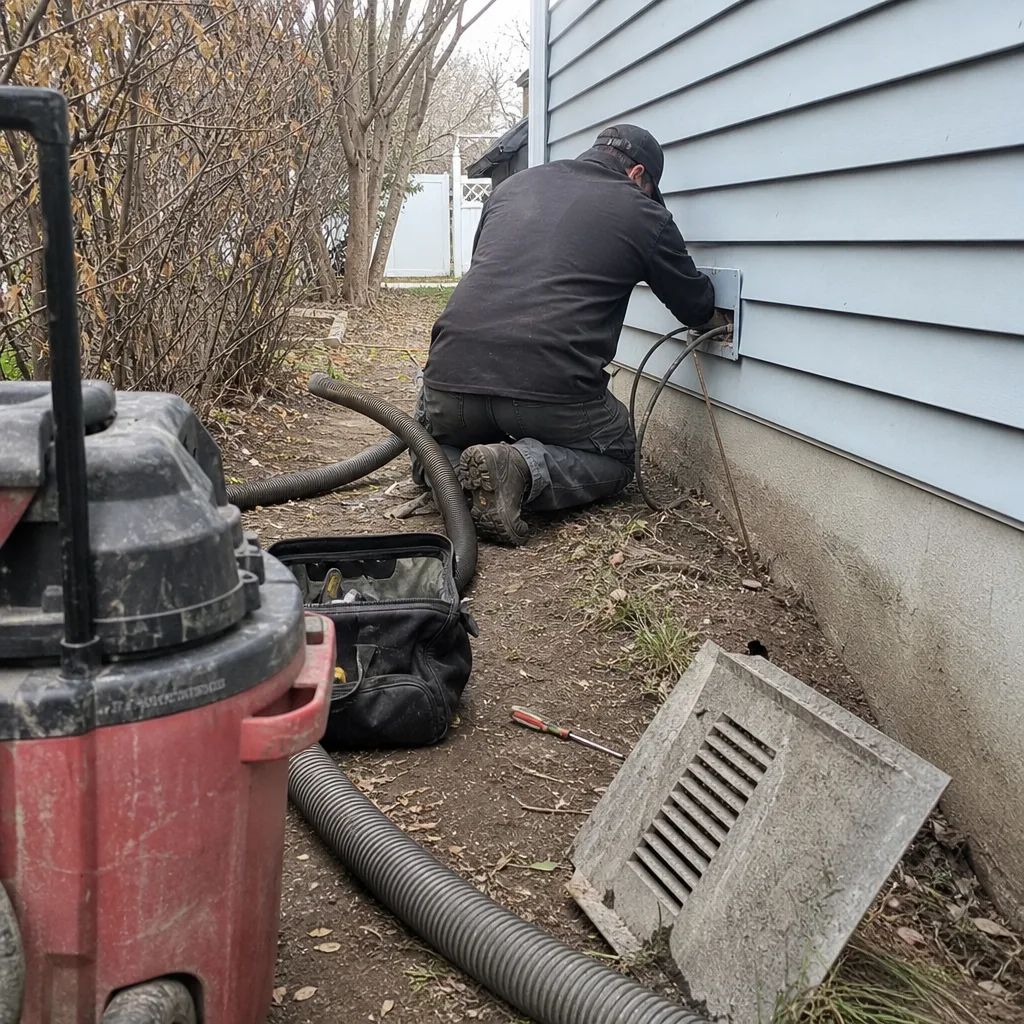 Before
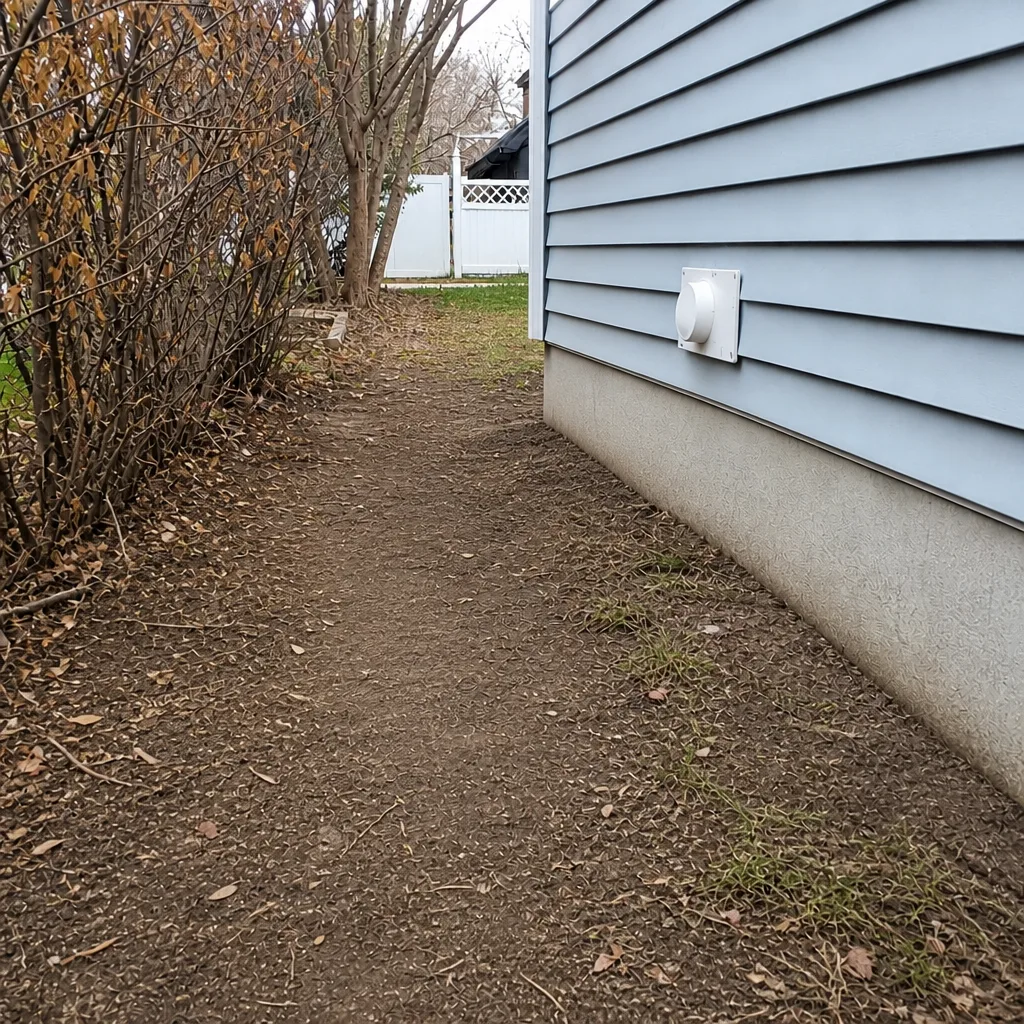 After
When to Call a Professional
Call a professional air duct cleaning service when you notice any of these: visible dust plumes from supply registers when the system kicks on, a musty or dusty smell at startup, debris accumulation around the return filter housing, evidence of a pest or water intrusion in the duct system, or a home with long flex runs where you can’t reasonably access the branch ducts. It’s also the right call if you’ve recently finished a renovation that produced a lot of drywall dust, or if you can’t remember the last time the dryer vent was cleaned and the run is longer than a few feet. Draper Air Duct Cleaning Pros offers free estimates in Draper; call (855) 550-7165. We answer 24/7. Fast dispatch from 7am to 7pm, Sunday through Friday.
Frequently Asked Questions
You can remove surface debris from the first few feet of a duct with a shop vac, but you can’t clean the whole system. A shop vac can’t sustain negative pressure across a full duct network, so it leaves the debris attracted to the branch duct walls and sitting in the air handler. For anything beyond a quick surface pass at the register opening, professional equipment is the only method that reaches the full run. Call (855) 550-7165 for an exact quote; estimates are free.
Yes, specifically when it uses forward-pressure tools like a leaf blower or compressed air at the register. Those approaches push debris deeper into the system and into the air handler instead of extracting it, which can foul the blower wheel and evaporator coil. Draper homes with long flex runs and finished basements are especially prone to this because debris redistributes through branches that are hard to inspect. Leave the air handler and branch ducts to a technician.
Cheap quotes usually reflect a limited scope: cleaning only the visible registers, using a truck-mounted or portable shop vac rather than a sealed negative-pressure system, or skipping the air handler and any sealing or sanitizing. The job looks finished because the vents are wiped down, but the branch ducts and air handler are untouched. Ask any provider what equipment they use, whether the air handler is included, and whether they provide before-and-after photos of your own ducts. Call (855) 550-7165 for an honest whole-system quote.
Most homes can go several years between full cleanings, though Draper’s dry climate and new-construction dust patterns make the schedule home-specific. The bigger driver is what’s happened since the last cleaning: a renovation, a pet addition, water intrusion, or a long stretch without filter changes all push the timeline up. A sealed, sanitized system with a good filter and a clean dryer vent stays cleaner longer than a clean system left leaky.
Before-and-after photos of your own ducts are the single best verification, and any provider should offer them without being asked. Ask to see the collection canister when they finish, and confirm in writing that the air handler was included in scope. A provider who can’t show you what came out of the system has no way to prove the job was done. Call (855) 550-7165 for a free estimate and ask about verification photos.
The rotary brush or whip attached to a professional machine agitates the adhered debris on the duct wall while the system holds negative pressure across the whole run, so loosened material travels toward the collection unit instead of settling back. A brush without sustained suction just redistributes dust. That combination, agitation plus sealed negative pressure, is what separates a professional clean from a shop vac pass. If you want to see how the equipment handles Draper’s long flex runs, call (855) 550-7165 for a free estimate.
The Bottom Line
The DIY vs professional air duct cleaning question comes down to reach and pressure, not effort. A homeowner can handle dryer vent lint, register washing, and filter housing vacuuming, and we’d rather you do those than pay someone for them. What you can’t handle is branch duct debris far from the register or the air handler interior, because consumer tools can’t hold negative pressure across the whole system. Draper’s newer two-story homes with long flex runs make that limitation sharper. Clean, seal, and sanitize the full system, and the air you’re breathing is something you can verify is cleaner rather than hope is.
If you’re ready for a professional assessment, Draper Air Duct Cleaning Pros offers free estimates in Draper. Call (855) 550-7165. We answer 24/7. Fast dispatch from 7am to 7pm, Sunday through Friday. One call covers cleaning, repair, and air quality, so you’re not juggling three contractors for related indoor-air work.
Written by the team at Draper Air Duct Cleaning Pros.