
Last updated November 24, 2026
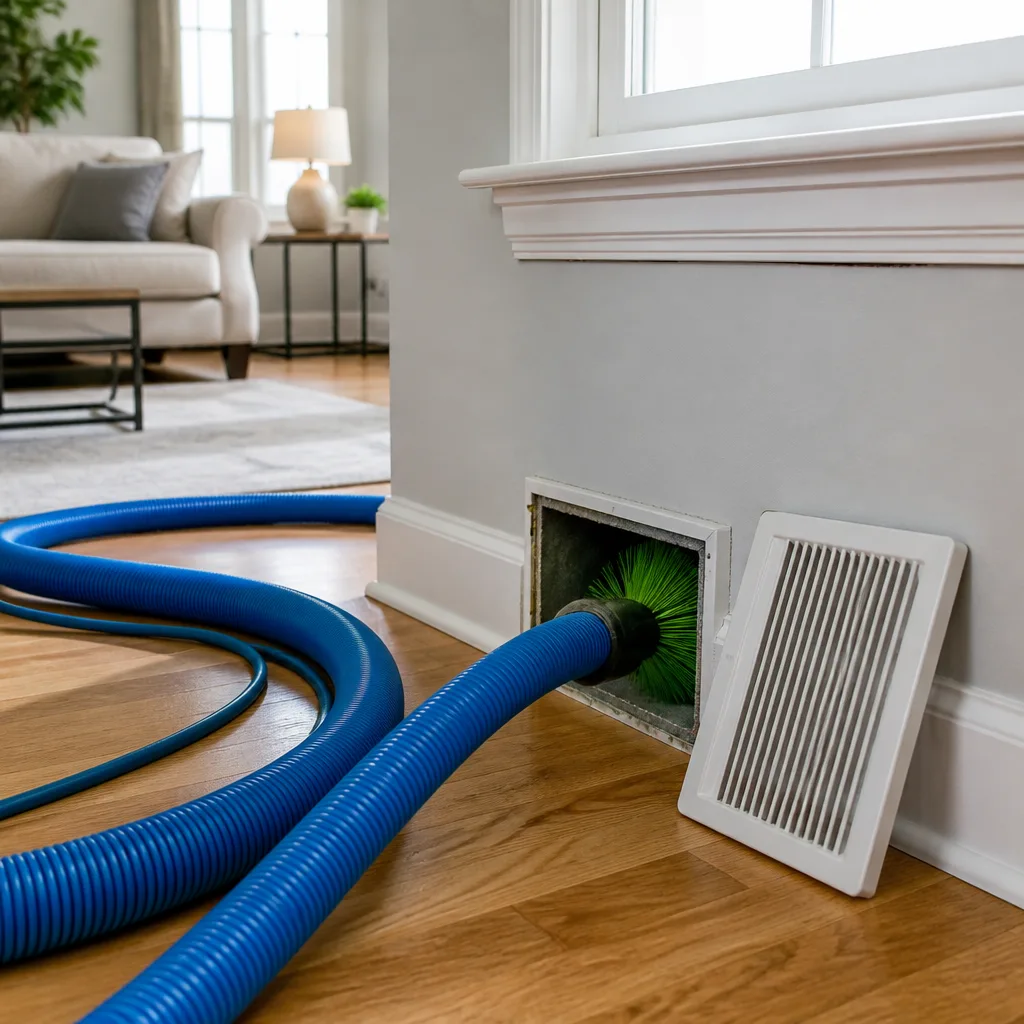 Whole-home duct cleaning
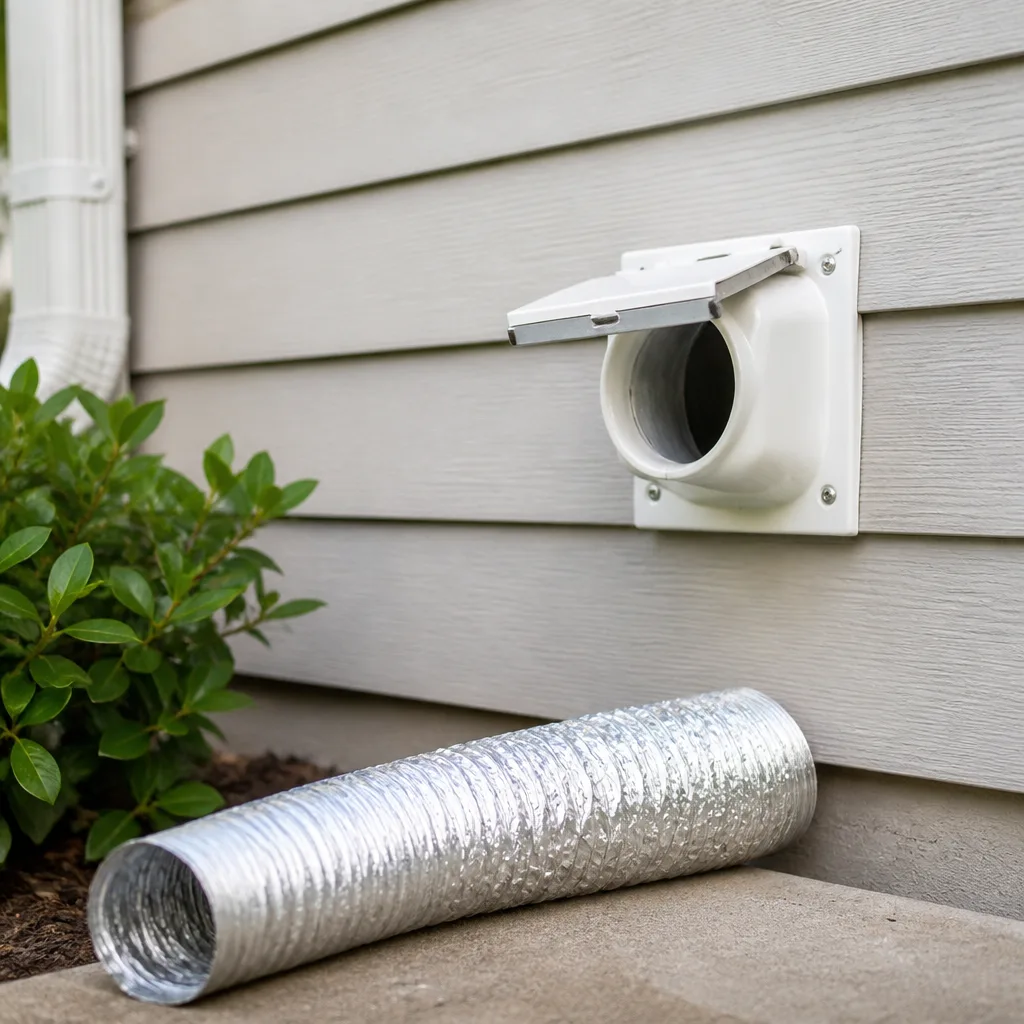 Dryer vent cleaning
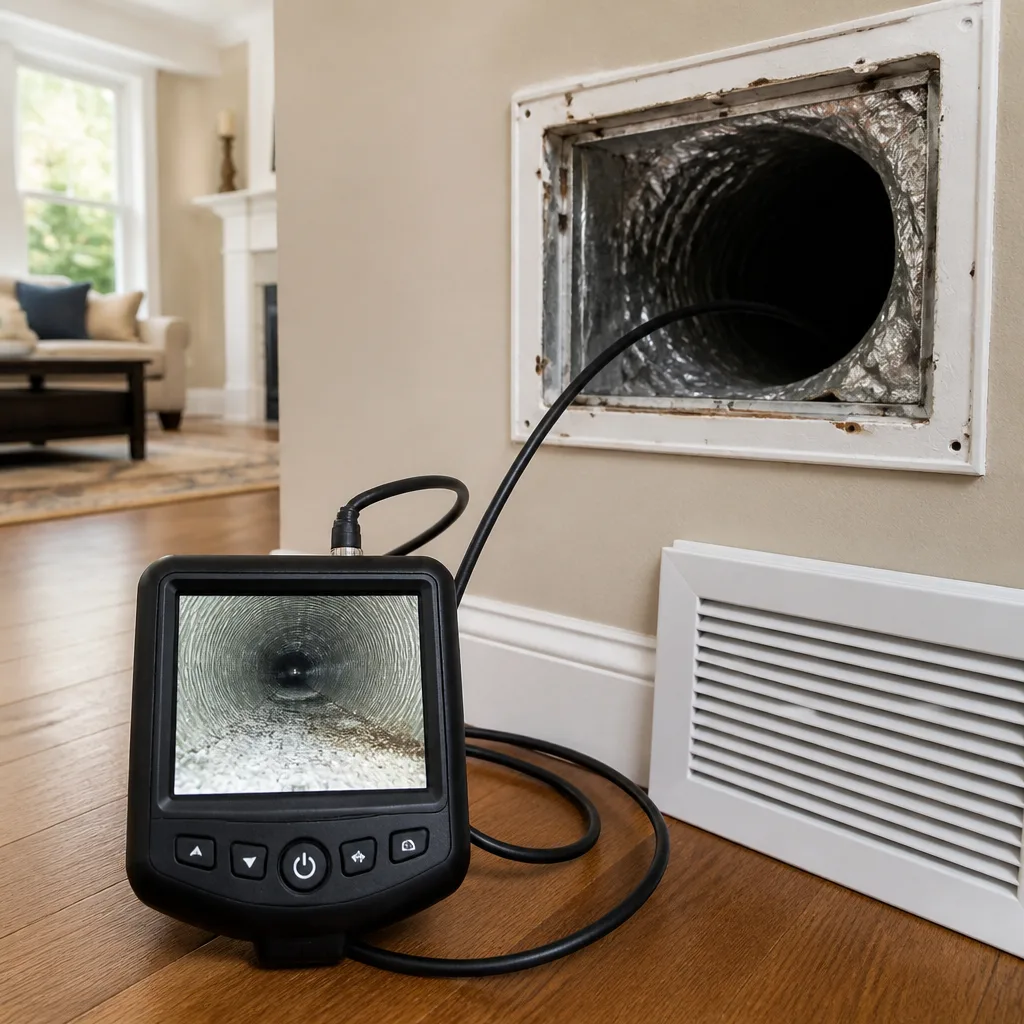 Camera inspection
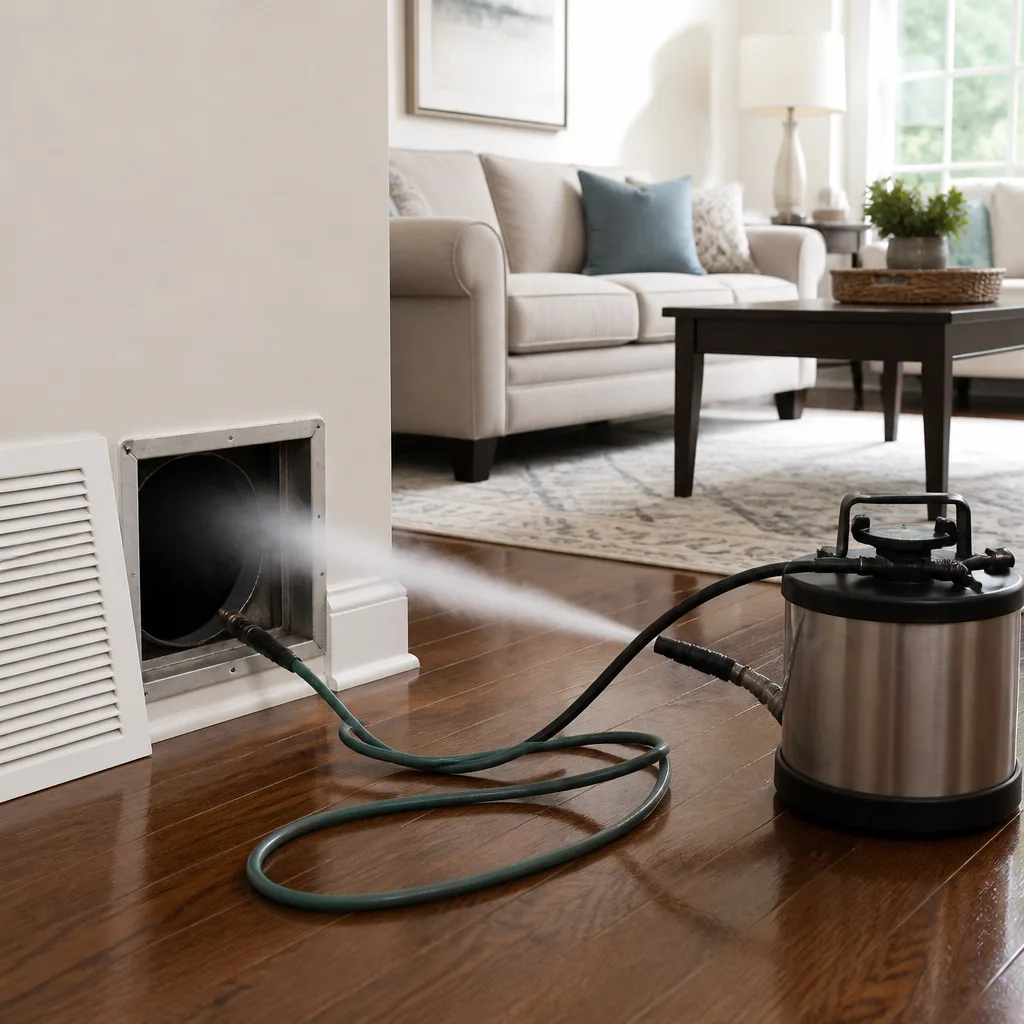 Sanitizing & deodorizing
Whole-system duct and dryer vent check with before-and-after photos - you see exactly what came out of your vents
That "$99 whole-house special" is a bait ad - the real number appears once they are in your hallway, or the "clean" is a shop-vac at the register. We photograph the inside of your ducts before and after instead.
Seasonal Air Duct Cleaning Care for Draper: Year-Round Homeowner’s Guide
Draper doesn’t have one bad air season. It has four different bad-air problems, each loading your duct system with different particles at different times of year. Most homeowners treat duct cleaning as an annual checkbox, something to schedule whenever the thought crosses their mind, and that single habit is why so many Draper systems run dirtier than they should by the time anyone inspects them. Spring brings pollen from the cottonwoods and junipers along the foothills. Summer pulls wildfire smoke into the valley. Fall drops construction dust from the active developments scattered across Draper. Winter traps fine particulate under the inversion layer against the Oquirrh and Wasatch ranges. Four stressors, four different responses. This guide walks through what each season actually does inside your ductwork and how to build a service cadence that maps to the calendar Draper actually lives with.
Quick Answer
In Draper, air duct cleaning works best on a seasonal cadence rather than a single annual appointment: a spring cleaning to clear pollen from return plenums before cooling season, a summer filtration check as wildfire smoke season peaks, a fall inspection after nearby construction raises silica and drywall dust, and a winter focus on fine particle buildup under the inversion. Cleaning, sealing, and sanitizing should be scheduled to match those four seasonal loads, and filter upgrades should follow the same rhythm.
Styles & brands we work with
- Whole-home duct cleaning
- Dryer vent cleaning
- Camera inspection
- Sanitizing & deodorizing
Table of Contents
- Why Draper Has Four Air-Quality Seasons, Not One
- Spring: Cottonwood and Juniper Pollen in the Return Plenum
- Summer: Wildfire Smoke and Why Activated Carbon Beats MERV Alone
- Fall: Construction Dust from Draper’s Active Developments
- Winter: Inversion PM2.5 and the Limits of Recirculation
- Building a 12-Month Service Cadence
- What Professional Equipment Actually Does Differently
- Common Mistakes to Avoid
- When to Call a Professional
- Frequently Asked Questions
Why Draper Has Four Air-Quality Seasons, Not One
Draper sits against the Wasatch foothills on the south end of the Salt Lake Valley, which means the city catches both the valley’s air and the mountains’ air depending on the day and the wind. That geographic position creates a year with four genuinely distinct particulate loads. A house in SunCrest, higher up on the Traverse Mountain side, sees different pollen timing and different smoke behavior than a house down in Draper’s older neighborhoods near the Historic Park. A newer build in the Suncrest or Corner Canyon area often has tighter construction and a different duct layout than a rambler from the 1980s or 1990s.
The result is that no single “clean your ducts every X years” rule is honest. The U.S. EPA’s general guidance is to clean when there’s visible contamination or a specific source of concern, not on a fixed clock. What that guidance translates to in Draper is this: your system accumulates four different loads in four different seasons, so the right question isn’t whether it’s “been a year,” it’s which seasonal load your ducts are currently carrying.
Here’s the four-season breakdown in short form:
- Spring (roughly March through May): Cottonwood fluff, juniper pollen, and other tree pollen coat return-air grilles and settle into return plenums.
- Summer (roughly June through September): Regional wildfire smoke pushes fine PM2.5 into homes through fresh-air intakes, gaps, and window openings.
- Fall (roughly September through November): Active construction across Draper generates silica and drywall dust that migrates into neighboring homes’ intakes.
- Winter (roughly December through February): Temperature inversions trap fine particulate against the valley floor and the foothills, and furnace runtime rises as the same time.
Each of those loads acts on a duct system differently. Pollen sticks and clumps. Smoke travels as ultrafine particles that pass through most filters. Construction dust is heavier and more abrasive. Inversion particulate is fine enough to stay airborne and settle slowly. Treating them the same means some of them get cleaned too often and others not often enough. In our experience, the homeowners who call for air duct cleaning on a seasonal rhythm end up with cleaner systems at lower overall cost than the ones who call for a “fix everything” cleaning every few years.
Spring: Cottonwood and Juniper Pollen in the Return Plenum
The Wasatch Front’s cottonwood and juniper pollen season is short and heavy. Junipers release pollen early, sometimes still with snow on the ground in the foothills above Draper, and cottonwoods follow with their characteristic fluff that coats screens, window wells, and the outdoor intake side of an HVAC system. That fluff is more than a nuisance: it’s a fine, tacky material that clings to return grilles and, from there, works its way into return plenums and across the evaporator coil.
The return plenum is the chamber just before your air handler where all the return ducts in the house combine into one big channel. It’s the low-pressure side of the system, which means it’s also the side that pulls air in through every gap, joint, and access panel. Pollen that reaches the return plenum has two problems. First, it’s filtered continuously by the blower, which means it’s redistributing throughout the occupied space. Second, it accumulates on the upstream side of the evaporator coil, and a coil that’s partially coated in pollen sheds less heat in the cooling season. By June, a Draper system that was never cleaned post-pollen sees cooling performance fall while running more hours.
What to check in spring
- Look at your return grilles. If you can see a visible grey-brown film on the grille fins, that’s what the rest of the return system looks like.
- Watch your filter’s loading rate. If a filter you used to swap every 90 days is now loading in 30, that’s a sign the return system is holding more material than usual.
- Note cooling deficits. If the system is running longer to hit the same temperature by late May or June than it did in March, pollen on the coil is a plausible contributor.
- Don’t try to clean the coil yourself. The coil is delicate, and improper cleaning can bend fins and void the equipment’s condition. This is a job for a trained technician with the right tools.
Our technicians have up to 12 years of experience working around the specific pollen and dust conditions of the south valley, and spring cleanings done with dedicated equipment like the Rotobrush and Nikro systems are designed exactly for this load. The right approach is to clean the return plenum and accessible ductwork, not just the supply side, because the supply side is downstream of the coil and stays comparatively protected.
Summer: Wildfire Smoke and Why Activated Carbon Beats MERV Alone
Wildfire smoke in the Salt Lake Valley is a summer reality, not a rarity, and it doesn’t respect property lines. When regional fires send smoke into the Wasatch Front, the fine particle component (PM2.5) can push indoor levels well above what you’d expect if you kept your windows closed. Smoke enters homes in three ways: through open doors and windows, through fresh-air intakes on newer HVAC systems, and through every small gap around doors, sills, and duct penetrations in older builds.
What catches people off guard is how smoke interacts with ductwork. The particles are small enough that many standard furnace filters let them pass. A higher-MERV filter captures more of them, but it also puts more restriction on the blower and can degrade airflow if your system wasn’t designed for it. Filters also don’t touch the chemical and odor components of smoke. That’s the point where activated carbon changes the outcome.
Activated carbon doesn’t filter particles, it adsorbs gases and odors. If your home has a whole-home air quality system, or if you’re considering one, the practical combination for smoke season is particle filtration for the dust side and carbon for the gas and odor side. That’s how systems like Honeywell and Aprilaire whole-home air quality products are typically applied, and it’s how we approach HVAC cleaning in a smoke-heavy summer: clean the impacted components, address the source, and match the filtration strategy to what the equipment can actually support.
What smoke exposure can leave in ductwork
- Fine grey film on supply registers, especially in rooms closest to the source side of the system
- Smoke odor that reappears when the system runs, even days after the air outside clears
- Settled particles in the lower sections of trunk lines, where airflow is slowest
- Elevated biological growth risk when smoke combines with summer humidity
A common mistake in Draper is to run the system on “fan on” during smoke season to circulate filtered air. That helps only if the filter and equipment are working well. If the system isn’t leaking and the filter is appropriate, continuous fan can help. If either of those isn’t true, continuous fan just moves smoke through a system that doesn’t have the capacity to catch it. We test the system’s behavior before recommending aggressive filtration upgrades for smoke season, because the wrong upgrade can cost comfort and efficiency.
Fall: Construction Dust from Draper’s Active Developments
Fall is the season most homeowners underestimate. Draper has seen sustained residential development across much of the city, and that means active grading, foundation work, and interior drywall installation are happening within blocks of occupied homes for months at a stretch. The dust from those sites is not the same as ordinary house dust. It’s dominated by two components that matter for air quality:
- Silica dust from cut concrete, grading, and stonework. It’s an abrasive mineral particulate, and it doesn’t break down.
- Drywall dust from interior finishing. It’s fine gypsum particulate that clings to surfaces via static and moves easily through the air.
Both migrate into neighboring homes through return intakes, open windows, door gaps, and construction-time pressure differences. When a house near a Draper build site pulls a negative pressure through the return side of the system (which happens whenever the blower is running and the return ducts aren’t sealed), it actively draws outdoor dust in through the smallest leaks. Once inside the return plenum, drywall dust settles on the blower wheel, and blower wheels loaded with drywall dust lose efficiency and start to run louder and hotter.
Here’s what that looks like inside a duct in Draper: a white or pale grey fine coating on horizontal runs, heavier on the return side than the supply side, often thickest in the sections closest to outdoor intakes or the mechanical room. Homeowners who have lived near an active construction site for a full season sometimes find that the coating is thick enough to change the color of the duct interior.
What to do about fall construction dust
- Schedule a fall inspection if you’re within a reasonable distance of an active development, especially one where grading or slab cutting has been happening.
- Have ducts checked for leaks on the return side. Sealing return leaks is one of the highest-value fall improvements you can make during construction season.
- Swap filters more often in fall, and check them visually at least monthly while the site is active.
- Don’t ignore a suddenly noisier blower. That’s often the first sign dust is loading the wheel.
Fall is also when dryer vent cleaning matters most from a safety standpoint. The same dust that settles in your return ducts can accumulate in the dryer exhaust line, and lint in a dryer vent is one of the leading residential fire-risk factors across the country. It’s a dedicated safety service, not a seasonal chore to defer.
Winter: Inversion PM2.5 and the Limits of Recirculation
Winter inversions in the Salt Lake Valley are a well-documented meteorological pattern. A layer of warmer air traps cooler air below it against the mountains, and the valley becomes a bowl that holds whatever particulate is emitted under it. That particulate includes tailpipe emissions, wood smoke, and industrial sources, and it collects as PM2.5, which is fine enough to enter the lungs deeply. Draper, sitting at the south end and against the foothills, catches the tail end of the valley’s inversion along with its own contribution.
During an inversion, the practical instinct is to close the windows and put the HVAC system on recirculation. That helps, and it’s the right move. But recirculation doesn’t eliminate fine particle buildup in ductwork, and here’s why: recirculation still cycles air through the system many times per day, and each pass deposits a fraction of the fine particles on duct surfaces, blower components, and the evaporator coil. Over a full winter inversion cycle, a house can accumulate a significant fine particulate load inside the return plenum and on the blower wheel even though outdoor air infiltration is reduced.
Winter is also when furnace runtime peaks, so any existing buildup gets inside the airstream more often. That’s the seasonal reality that makes a winter checkup worth doing, especially in homes where the summer and fall cleanings weren’t done.
Winter system hygiene priorities
- Replace or upgrade filters before heating season starts, not after the first cold snap
- Have the blower inspected for fine dust accumulations, which are hard to see from outside the unit
- Consider sanitizing treatment if the system has had any moisture or biological-growth concerns (visible growth, musty odor, or past water intrusion into the system)
- Keep recirculation mode on during high-inversion days, and avoid wood-burning and gas fireplaces during those days if the home has a mechanical ventilation system
Sanitizing is not the same as cleaning. Cleaning removes physical debris. Sanitizing uses targeted treatment, applied with equipment like the Abatement Technologies systems we use, to address mold spores, bacteria, and allergens at the source. In a Draper home that has had a chronic moisture issue, winter is often the best time to schedule both, because the home is closed up and the treatment has time to work without continuous ventilation losses.
Building a 12-Month Service Cadence
A 12-month service cadence for a Draper home maps services to the four seasonal loads we just covered, not to arbitrary calendar quarters. The goal isn’t to schedule every service every year. It’s to schedule the right service at the right season for what’s actually happening in your home and around it.
Recommended seasonal cadence
- Early spring (before pollen season peaks, usually March): Full system inspection, return-side cleaning booked for late spring after pollen drops. If you’re in a Draper area with heavy cottonwood exposure, add a return plenum cleaning in May.
- Late spring (May): Duct cleaning focused on the return side and accessible ductwork. Filter upgrade to match the season’s pollen load. Cooling season readiness check.
- Early summer (June): Air-quality filtration review before smoke season. If carbon filtration is in scope, this is when to install or replace media.
- Late summer (August): Follow-up filter check during smoke season. If summer smoke has been heavy, consider a late-summer cleaning before the fall dust load begins.
- Fall (September through October): Inspection for construction dust, particularly if a nearby site has been active. Seal any return-side leaks and address blower wheel dust.
- Late fall (November): Dryer vent cleaning for fire-safety. Sanitizing treatment if any moisture or growth concerns have come up over the year.
- Early winter (December): Filter refresh and heating-season readiness check. Sanitizing treatment if winter is your window.
- Mid-winter (January through February): Recirculation management during inversions, and inspection if the system is showing any symptoms (noise, reduced airflow, musty odor).
Homeowners who want a simpler framework can use a load-based rule instead of a calendar: clean when a seasonal load has occurred. That typically means one cleaning per year in most Draper homes, two in homes with heavy nearby construction or wildfire exposure, and a filter swap at each major transition. Whole-system work that includes repair and sealing fits into the same cadence, and it’s the part that most single-task duct cleaners skip.
What Professional Equipment Actually Does Differently
Duct cleaning equipment matters more than most homeowners realize. Shop vacuums and consumer-grade cleaning tools don’t generate the airflow or the mechanical action needed to dislodge adhered material from duct walls, and they often make the problem worse by agitating settled dust without capturing it. The professional systems we use, including the Rotobrush and Nikro lines, are designed to combine aggressive mechanical agitation with negative-pressure collection, which means material that’s dislodged actually leaves the system instead of redistributing inside it.
The full-system approach matters too. Cleaning alone addresses what’s currently in the ducts. Duct repair and sealing closes the leaks that reintroduce contaminants and waste energy. Sanitizing addresses biological contamination at the source. Those three phases (clean, seal, and sanitize) are what’s needed for a system that’s realistically been impacted by four seasonal loads rather than one. A service that only cleans, without sealing or sanitizing, is treating the symptom.
Compatibility with the rest of the home’s air-quality infrastructure matters as well. If a home runs a Honeywell or Aprilaire whole-home filtration or purification system, the duct cleaning work should be planned around that equipment, not alongside it as if the equipment weren’t there. Whole-system integration is where a specialist approach pays for itself.
For a broader picture of what the full service catalog covers, see Draper Air Duct Cleaning Pros.
See the difference
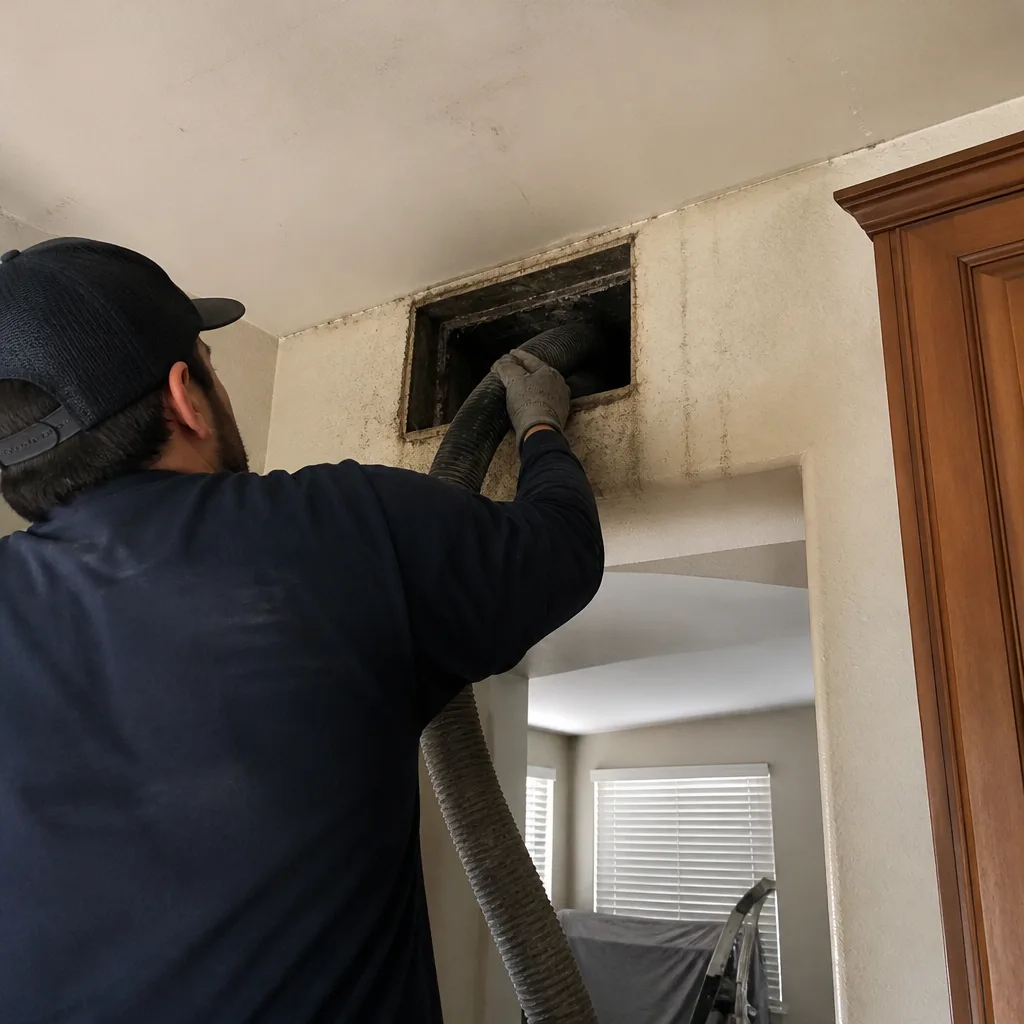 Before
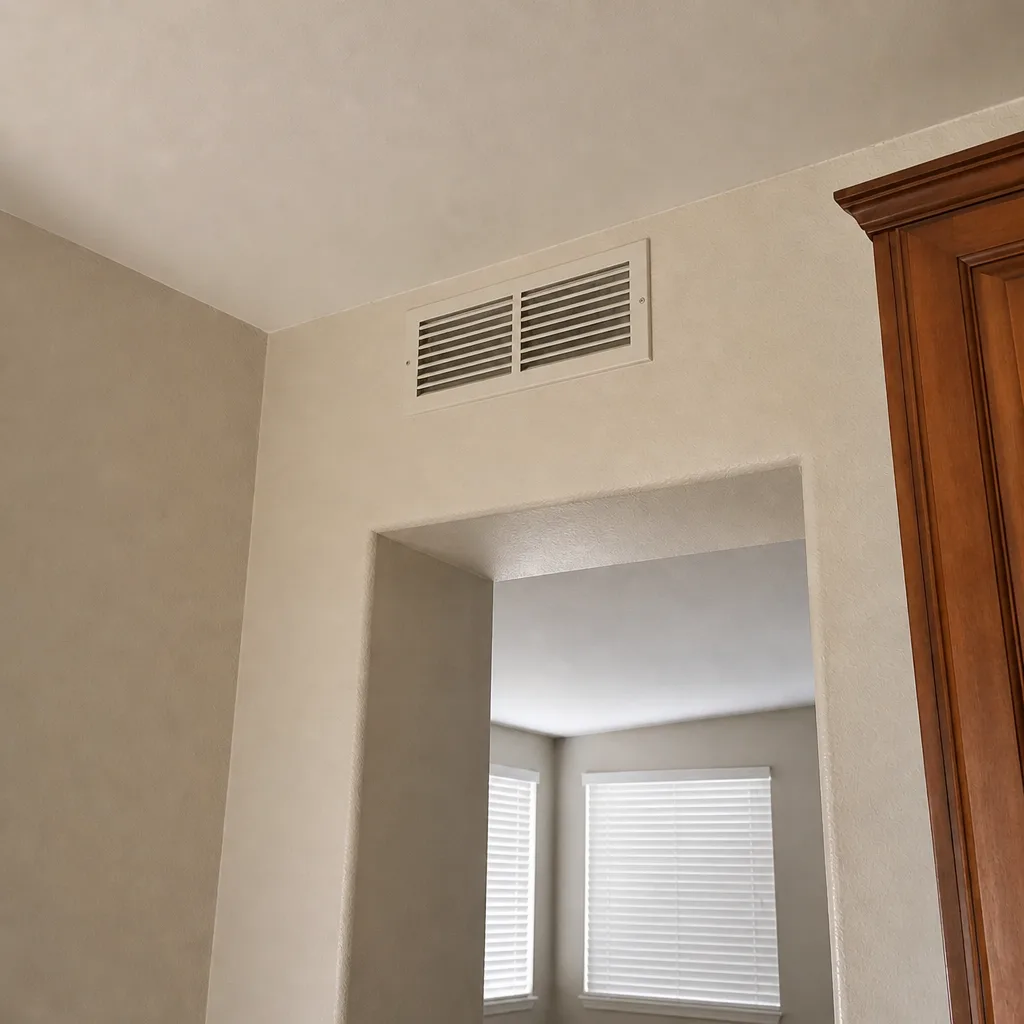 After
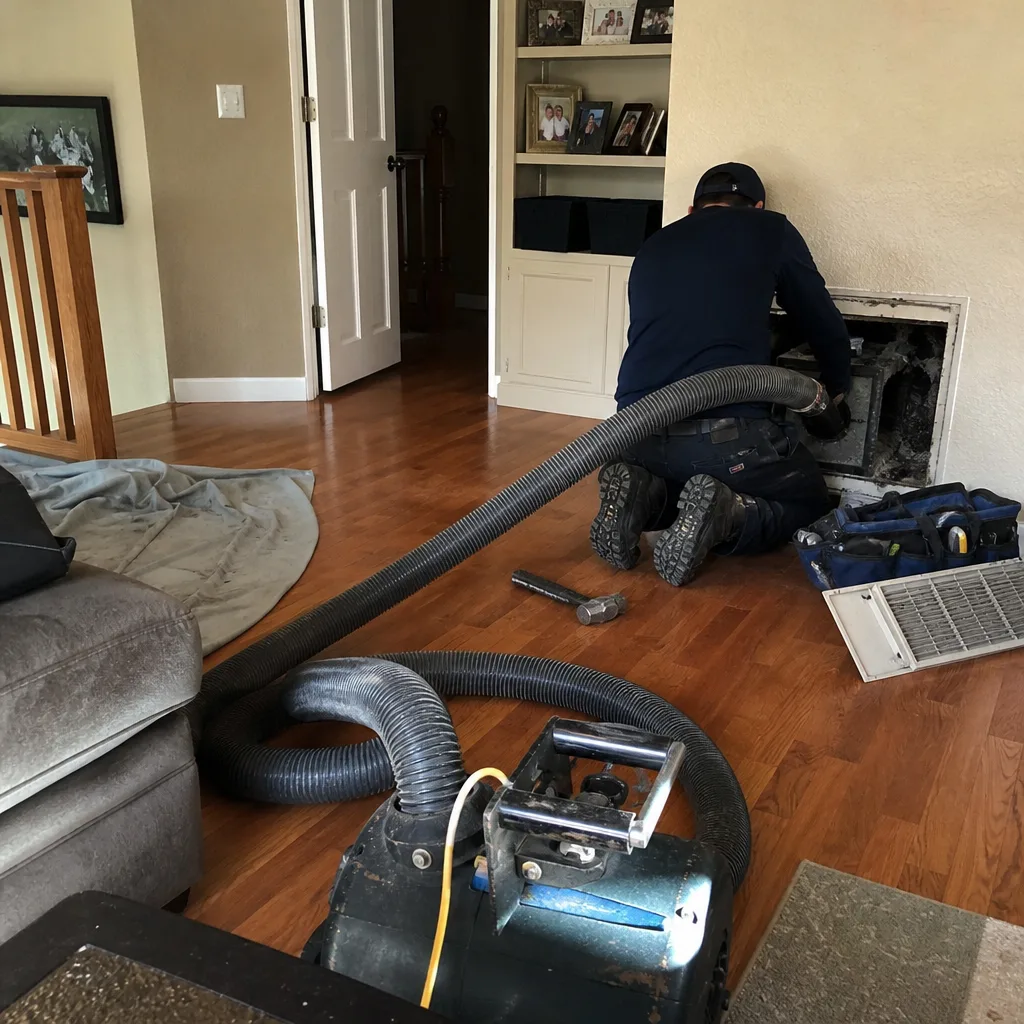 Before
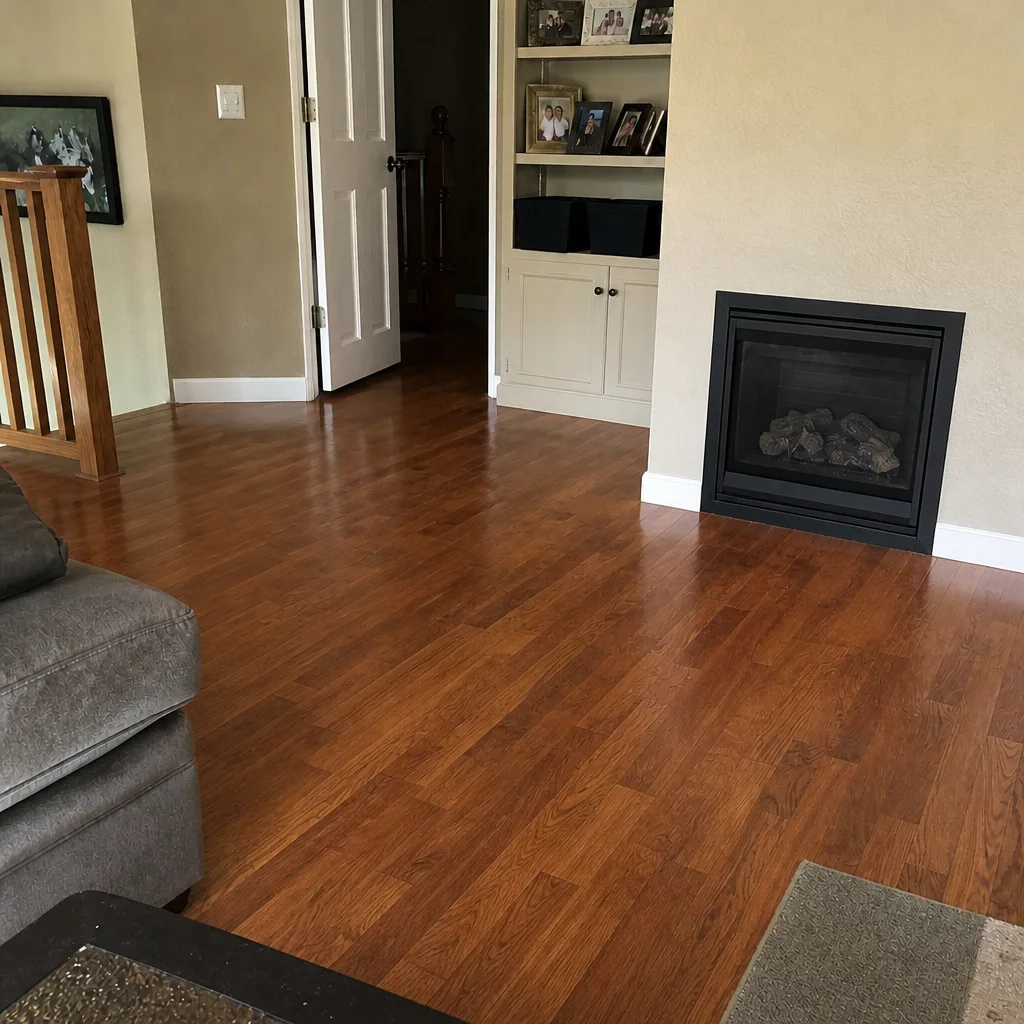 After
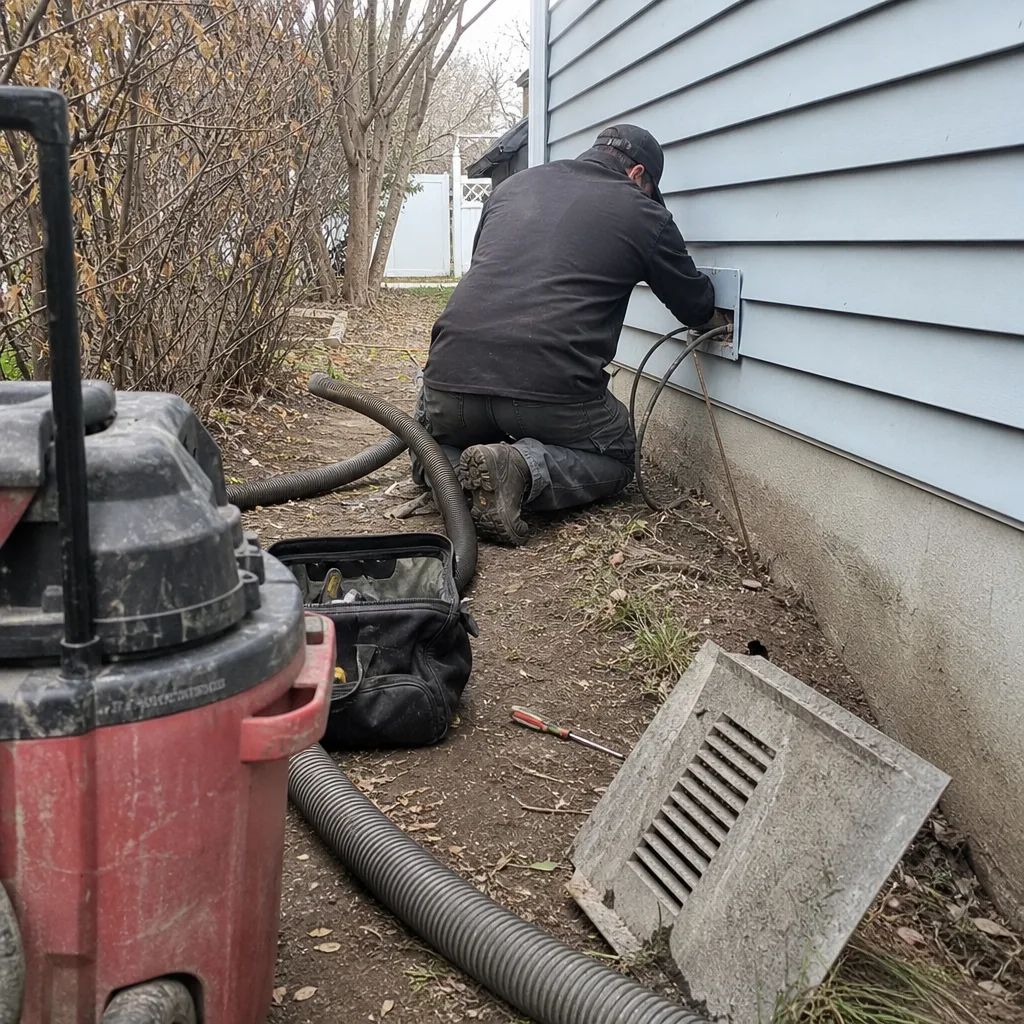 Before
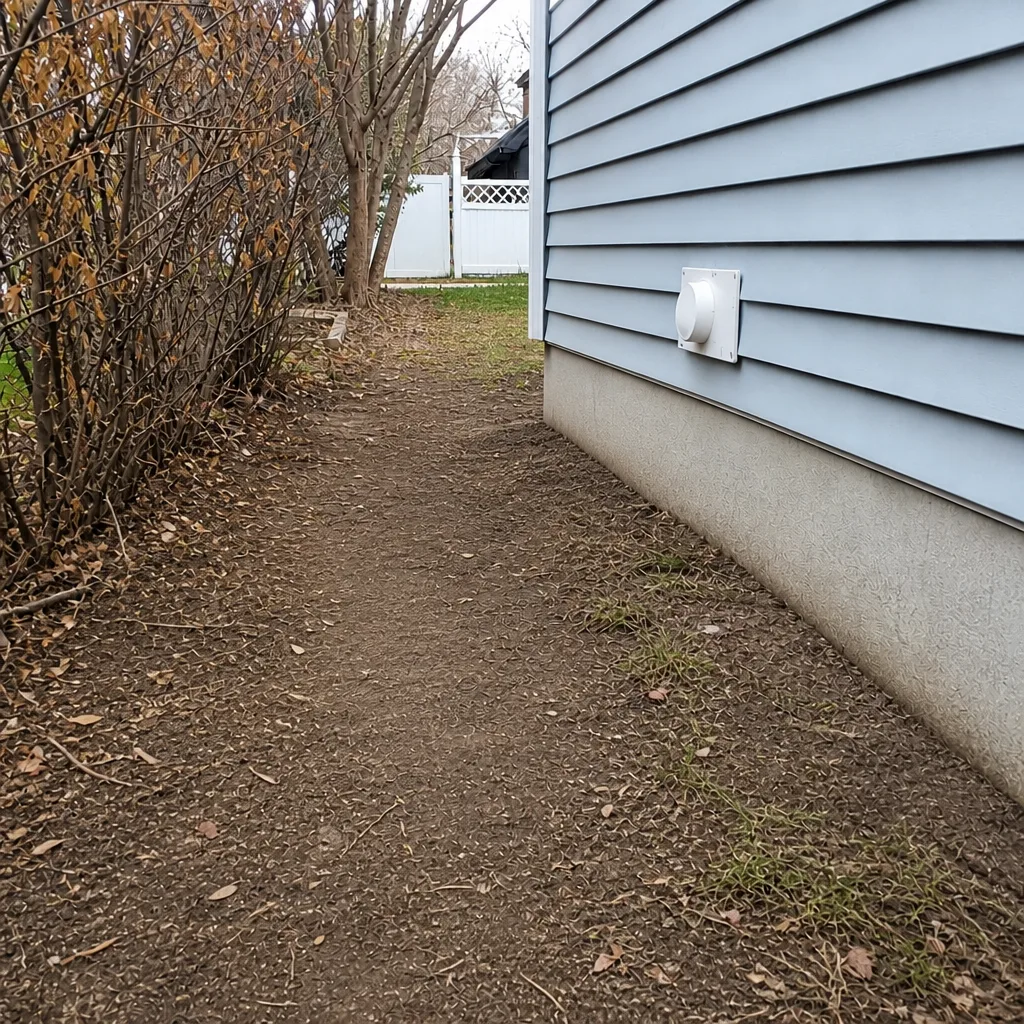 After
Common Mistakes to Avoid
- Treating duct cleaning as a single annual event. In Draper, a summer smoke load and a fall construction load are different, and one combined cleaning a year can leave one of them only partially addressed.
- Running a high-MERV filter without checking airflow. A filter that’s too restrictive for the system can hurt efficiency and comfort. Match the filter to the equipment, not to the marketing on the box.
- Assuming recirculation mode “keeps the duct clean” during winter inversions. Recirculation reduces outdoor air infiltration, but it still cycles indoor air through the system many times a day and deposits fine particles.
- Skipping return-side cleaning because supply registers look clean. The return side is where the load accumulates, and it’s the side most often overlooked in a “vent cleaning” service.
- Ignoring visible construction dust after a nearby build wraps up. That coating doesn’t disappear on its own. It keeps entering the airstream every time the system runs.
- Deferring dryer vent cleaning to “when we get around to it.” Lint accumulation in a dryer vent is a fire-risk issue that doesn’t fix itself with time.
- Booking the cheapest coupon mailer without checking what it includes. A low coupon price for “$99 whole-house duct cleaning” almost never covers the full return side, sealing, or sanitizing. What gets done is not what the full-system task requires.
When to Call a Professional
Some situations obviously call for professional intervention, and some are subtler. In Draper, the specific triggers we see most often are: visible debris or fine dust on return grilles that keeps coming back after filter changes; a persistent musty or smoke odor inside the home even when the system has been off; a blower that’s become noticeably louder or slower over a season; a house located near an active construction site in Draper where dust has been visibly migrating indoors; a dryer that’s taking longer to dry than it used to, which can indicate a lint-clogged exhaust; and any home preparing for a major system upgrade where the ducts themselves haven’t been addressed in a few years. If any of these are on your list, a professional inspection is the right starting point.
Draper Air Duct Cleaning Pros offers free estimates in Draper. Call (855) 550-7165. We answer 24/7. Fast dispatch from 7am to 7pm, Sunday through Friday.
Frequently Asked Questions
Most Draper homes benefit from a targeted cleaning once a year, timed to the seasonal load that hits hardest in your specific neighborhood, plus a second cleaning in years with heavy wildfire smoke or nearby construction. The right frequency depends on neighborhood exposure, system condition, and filter habits. An inspection in the spring typically tells you what the year actually needs.
Yes. Pollen enters through return intakes, door gaps, window openings, and any return-side leaks, and it settles in return plenums and across the evaporator coil. By June, that pollen load can reduce cooling efficiency. Cleaning the return side after pollen season is one of the highest-value seasonal steps in Draper.
Smoke’s finest particles (PM2.5) are small enough to pass through many furnace filters and to slip through small gaps around doors, sills, and duct penetrations. Filters alone don’t fully address it. That’s why carbon filtration for gas and odors, combined with particle filtration that matches your system’s capacity, is the standard summer strategy.
Cleaning physically removes debris from duct walls, blower components, and coils. Sanitizing uses targeted treatment (applied with equipment like the Abatement Technologies systems we use) to address mold spores, bacteria, and allergens at the source. Cleaning addresses what’s there now, sanitizing addresses what can regrow if moisture or biological growth has been a concern.
Yes, particularly in Draper neighborhoods near active sites. Silica and drywall dust are fine enough to migrate into neighboring homes through return-side leaks, and they accumulate on blower wheels and along duct runs. If a house sits within a few blocks of active grading or interior finishing for a full season, a fall inspection is worth doing.
Dryer vents deserve professional attention because lint fires are a leading residential fire risk and the hidden sections of the vent run are where lint tends to collect. A technician trained on the specific hazard profile of lint-clogged exhaust systems can reach the full run, including the exterior termination, and verify it’s clear. Call (855) 550-7165 for a free estimate.
The Bottom Line
Draper’s air has four distinct seasonal personalities, and each one puts a different load on your duct system. Spring pollen accumulates in return plenums and on the evaporator coil. Summer wildfire smoke pushes fine particulate and odor through the system, and carbon filtration outperforms a MERV-only strategy in that scenario. Fall construction dust from nearby Draper developments introduces silica and drywall particulate that settles on the blower. Winter inversion PM2.5 keeps recirculation helpful but incomplete, and the furnace runs long enough that any existing buildup has more time in the airstream. Matching your cleaning, sealing, sanitizing, and filtration choices to that rhythm is what a seasonal cadence is for. One call covers cleaning, repair, and air quality, so it’s a straightforward place to start.
Call (855) 550-7165 for a free estimate. We answer 24/7. Fast dispatch from 7am to 7pm, Sunday through Friday.
Written by the team at Draper Air Duct Cleaning Pros.